Sirop Alpha Amylase for Industrial Baking
Buy sirop alpha amylase for baking with practical specs, dosage, QC checks, COA/TDS/SDS review, pilot validation, and supplier qualification.
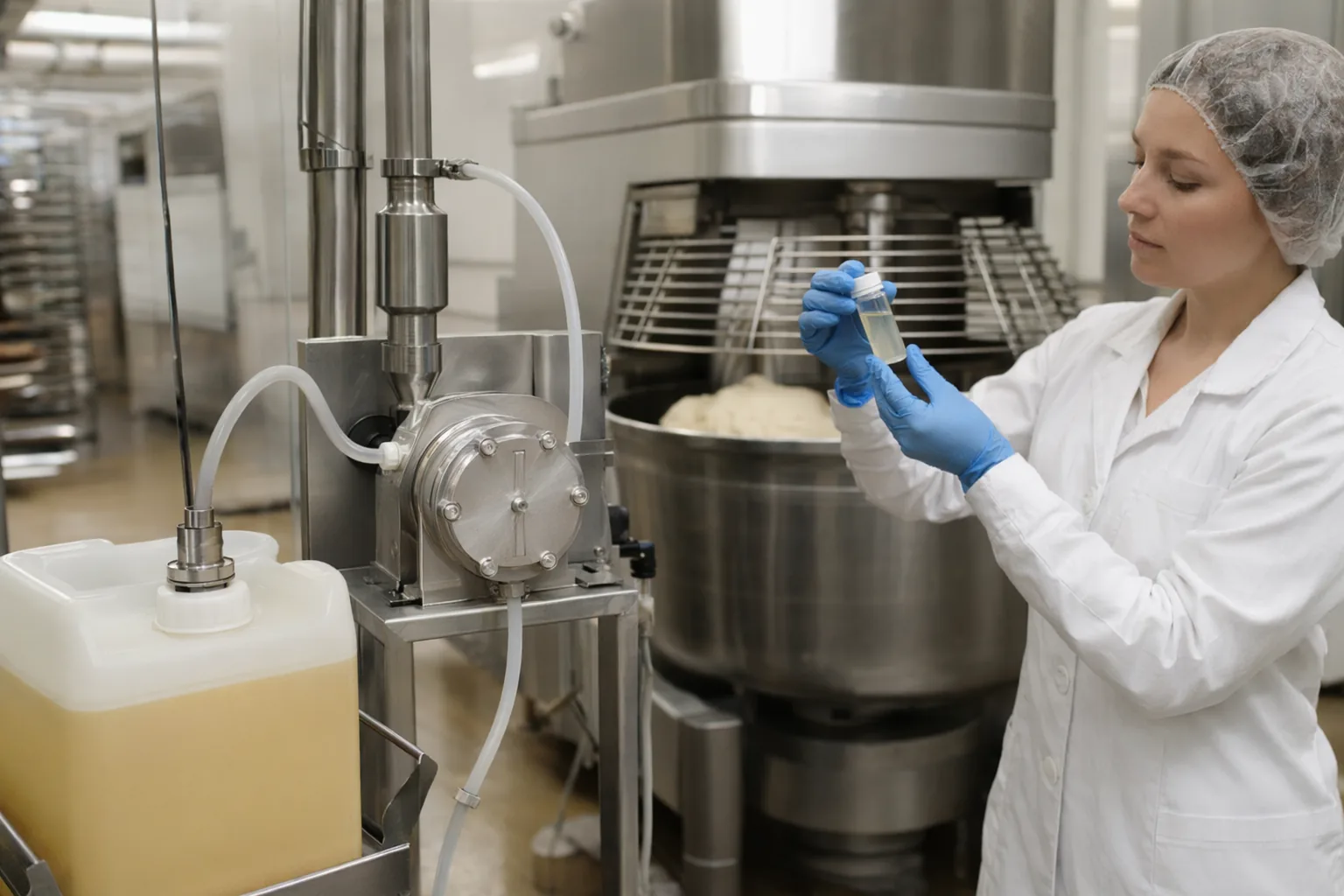
A practical B2B buyer guide for selecting liquid alpha-amylase syrup formats, validating performance in dough systems, and controlling cost-in-use.
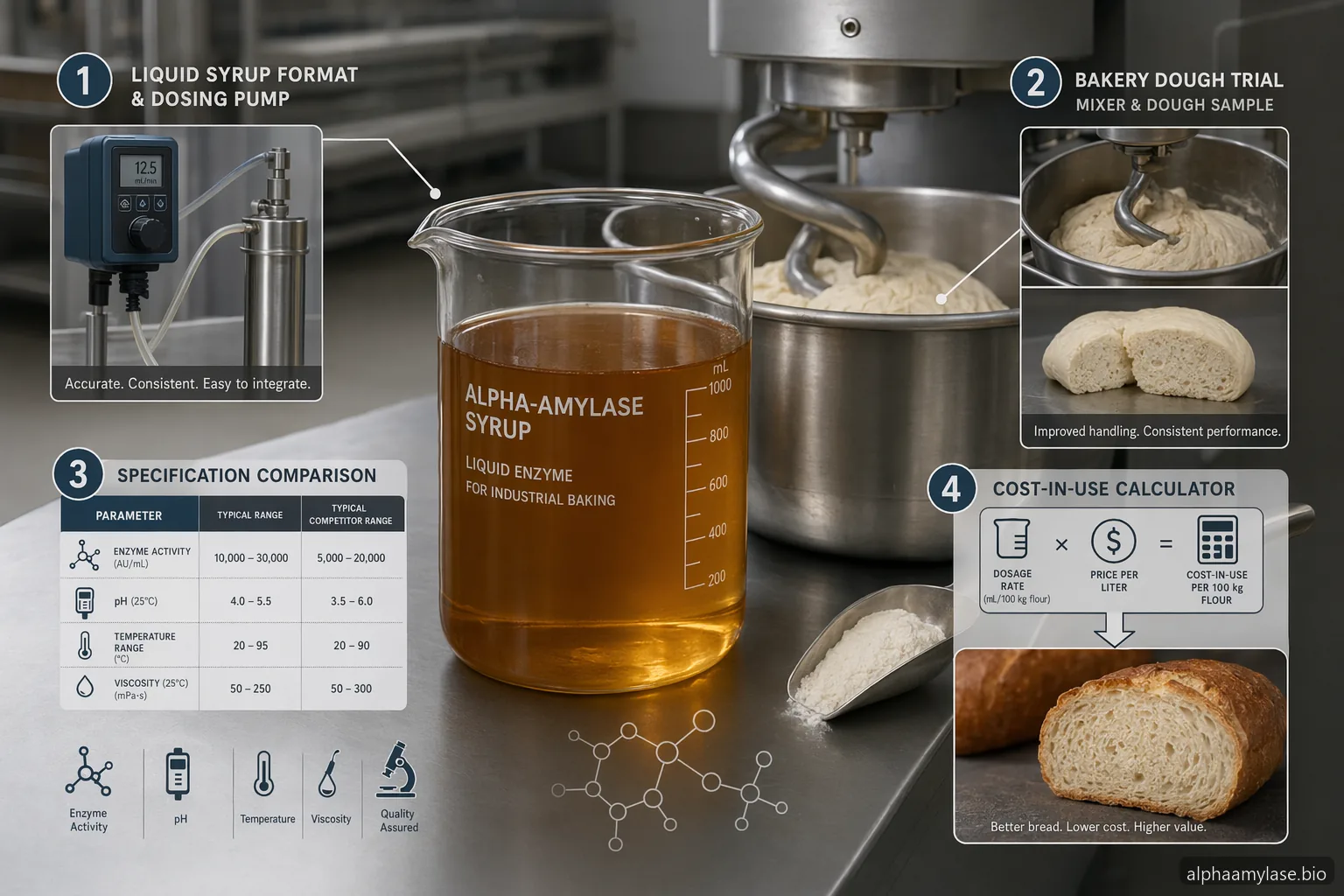
What Buyers Mean by Sirop Alpha Amylase
In industrial baking, sirop alpha amylase commonly means a liquid alpha-amylase preparation supplied for metered dosing into flour, sponge, brew, or dough systems. The enzyme hydrolyzes damaged starch into smaller dextrins and fermentable sugars, supporting yeast activity, crust color, loaf volume, and crumb softness. Unlike retail or medical syrup products, this page concerns food-processing enzymes for B2B manufacturing. A liquid format can improve dispersion and dosing accuracy, especially where automated ingredient systems are already installed. Buyers should confirm whether the product is fungal, bacterial amylase, or another alpha amylase protein source, because temperature tolerance and inactivation profiles differ. For baking, the target is controlled activity during mixing, fermentation, proofing, and early baking, not uncontrolled starch breakdown. A qualified supplier should provide activity definition, recommended application range, allergen and handling information, and batch-specific analytical data.
Use case: bread, buns, rolls, sweet dough, crackers, and premixes • Format: liquid enzyme preparation for dosing accuracy • Buyer focus: activity, stability, safety documentation, and repeatability
Process Conditions for Bakery Trials
Bakery alpha amylase trials should begin with conservative dosage bands and measurable product targets. Depending on enzyme strength and flour quality, liquid dosing may start around 10-100 g per metric ton of flour, then be adjusted by supplier activity units and bakery results. Many baking systems operate near pH 4.5-6.5, with dough temperatures around 25-32°C and fermentation or sponge stages that may reach 30-40°C. The enzyme must provide enough activity before oven spring while avoiding excessive dextrin formation that can cause sticky crumb or gummy slicing. Thermal inactivation depends on enzyme origin; bacterial amylase can be more heat tolerant than fungal types, so the TDS should be reviewed carefully. Trial records should include flour damaged starch, falling number, water absorption, mixing time, proof time, bake profile, crumb texture, and shelf-life observations.
Start low and scale dosage by activity units, not only by weight • Track crumb stickiness, crust color, volume, and sliceability • Confirm inactivation behavior under your bake profile
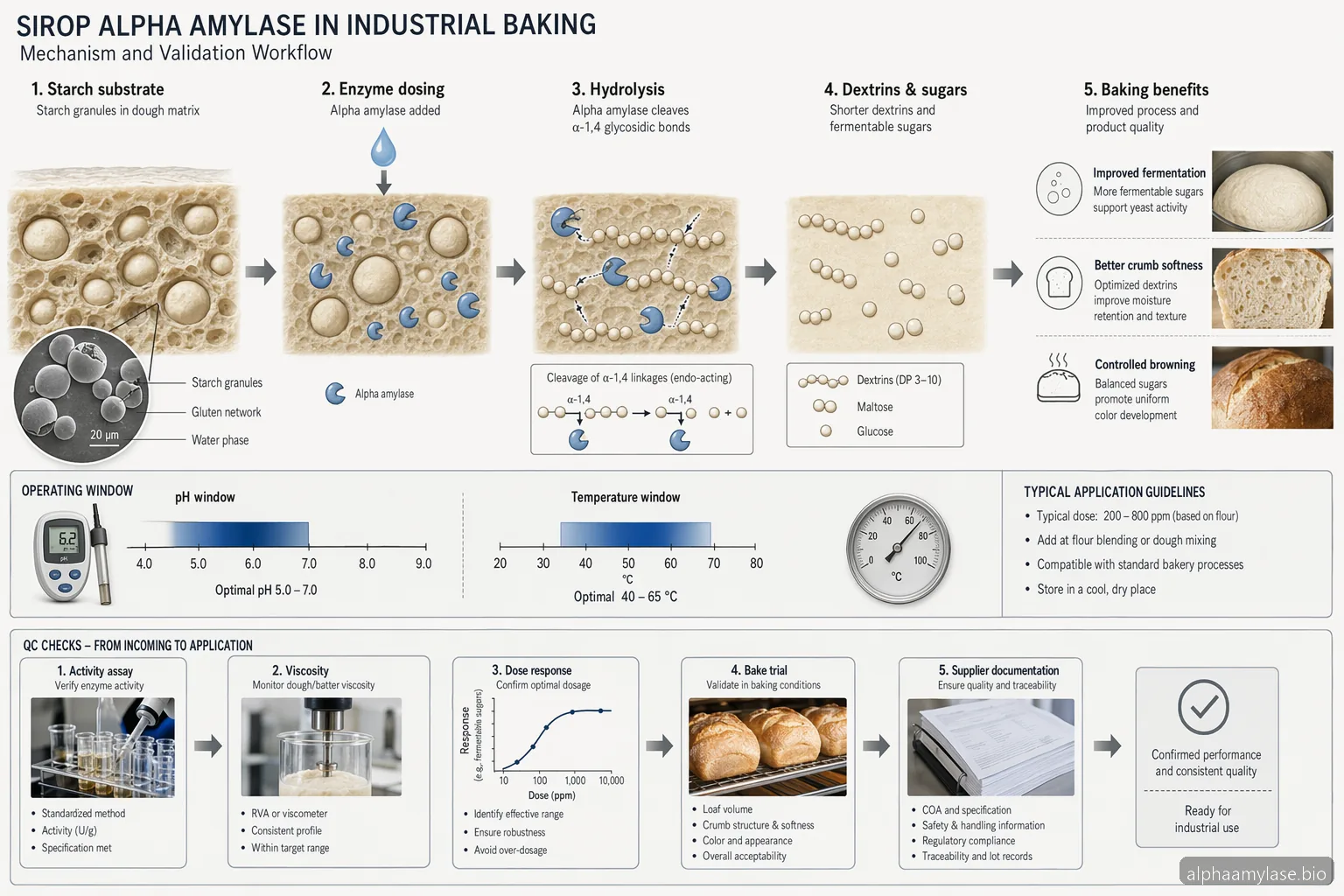
How to Compare Alpha Amylase Specifications
A serious alpha amylase supplier should make comparison possible through consistent documents and transparent specifications. The Certificate of Analysis confirms batch activity and key release tests. The Technical Data Sheet should state enzyme type, activity unit definition, application range, storage conditions, solubility or dispersibility, and processing guidance. The Safety Data Sheet should cover worker handling, dust or aerosol precautions, spills, storage, and transport information. When buyers search terms such as alpha amylase 3000, alpha amylase sirop, or alpha-amylase, they may be comparing products with different activity methods and dilutions; those numbers are not interchangeable unless the assay is the same. Also clarify alpha amylase werte, meaning the analytical values or activity results used for release. For accurate cost-in-use, calculate delivered enzyme cost per ton of flour at validated dosage, including yield, waste reduction, and quality impact.
Request COA, TDS, SDS, and sample label before trials • Compare assay method and unit definition across suppliers • Calculate cost per ton of flour, not price per drum alone
Pilot Validation and QC Checklist
Pilot validation should reproduce the commercial process as closely as possible. Run at least one control batch and two or more dosage levels under normal flour, water, yeast, mixing, fermentation, and baking conditions. If flour quality varies seasonally, repeat trials with high and low falling-number flour to understand robustness. QC checks may include dough handling score, proof height, oven spring, loaf volume, crumb firmness over storage, water activity, slice quality, crust color, and sensory review by trained production staff. For packaged bread, shelf-life texture testing is especially important because alpha amylase enzyme performance may continue to affect softness indirectly through starch modification. Record exact dosing method, pump calibration, mixing order, and hold times. The final approved dosage should balance processing tolerance, finished-product quality, and cost-in-use without narrowing the production window.
Use a control batch and multiple dosage levels • Verify metering pump accuracy for liquid enzyme • Document finished-product and shelf-life results
Supplier Qualification for Industrial Baking
Supplier qualification should cover technical capability, documentation discipline, and supply reliability. Ask whether the supplier can support bakery pilot work, provide retained samples, explain batch-to-batch variation, and notify customers before specification or formulation changes. Review packaging options, lead times, minimum order quantities, shelf life, recommended storage temperature, and cold-chain sensitivity if applicable. For liquid sirop alpha amylase, storage is commonly specified in a cool, dry location or refrigerated range depending on formulation; always follow the TDS. Confirm food-processing suitability, country-specific regulatory status, and documentation needed for your quality system without assuming certifications that are not documented. A strong alpha amylase supplier should help translate enzyme activity into bakery outcomes: better fermentation consistency, controlled crust color, crumb softness, and predictable line performance. Approval should be based on validated performance and complete documentation, not a single sample result.
Confirm lead time, shelf life, packaging, and change control • Require batch traceability and retained-sample policy • Approve only after pilot and production-scale confirmation
Technical Buying Checklist
Buyer Questions
In B2B baking, sirop alpha amylase usually means a liquid alpha amylase enzyme preparation rather than a consumer syrup. It is designed for controlled dosing into flour or dough systems to modify starch during processing. Buyers should confirm the enzyme source, activity units, recommended dosage, pH and temperature range, and food-processing documentation before using it in commercial production.
There is no universal dosage because activity units, flour quality, formula, fermentation time, and bake profile all matter. A practical starting band for some liquid bakery enzymes is about 10-100 g per metric ton of flour, then adjusted through pilot trials. The approved dosage should be based on loaf volume, crumb softness, stickiness, crust color, shelf-life texture, and cost-in-use.
The choice depends on the process target. Fungal alpha amylase is often selected where moderate activity and predictable bake inactivation are desired. Bacterial amylase may offer higher heat tolerance, which can be useful in some systems but may raise over-dextrinization risk if not controlled. Review the TDS, run side-by-side trials, and verify crumb quality after storage.
At minimum, request a batch Certificate of Analysis, Technical Data Sheet, and Safety Data Sheet. For supplier qualification, also ask for traceability information, recommended storage conditions, shelf life, regulatory statements relevant to your market, allergen information where applicable, and change-control policy. These documents help your QA, procurement, and production teams compare suppliers on more than price.
Calculate cost-in-use by multiplying the validated dosage by delivered product cost, then express it per metric ton of flour or per thousand finished units. Include handling losses, pump calibration accuracy, shelf-life impact, waste reduction, and quality improvements. A lower-priced drum may be more expensive if activity is lower, dosage is higher, or performance is less consistent.
Alpha-Amylase for Research & Industry
Need Alpha-Amylase for your lab or production process?
ISO 9001 certified · Food-grade & research-grade · Ships to 80+ countries
Frequently Asked Questions
Is sirop alpha amylase the same as alpha amylase enzyme for baking?
In B2B baking, sirop alpha amylase usually means a liquid alpha amylase enzyme preparation rather than a consumer syrup. It is designed for controlled dosing into flour or dough systems to modify starch during processing. Buyers should confirm the enzyme source, activity units, recommended dosage, pH and temperature range, and food-processing documentation before using it in commercial production.
What dosage should a bakery use for liquid alpha-amylase?
There is no universal dosage because activity units, flour quality, formula, fermentation time, and bake profile all matter. A practical starting band for some liquid bakery enzymes is about 10-100 g per metric ton of flour, then adjusted through pilot trials. The approved dosage should be based on loaf volume, crumb softness, stickiness, crust color, shelf-life texture, and cost-in-use.
Should I choose fungal or bacterial amylase for baking?
The choice depends on the process target. Fungal alpha amylase is often selected where moderate activity and predictable bake inactivation are desired. Bacterial amylase may offer higher heat tolerance, which can be useful in some systems but may raise over-dextrinization risk if not controlled. Review the TDS, run side-by-side trials, and verify crumb quality after storage.
What documents should an alpha amylase supplier provide?
At minimum, request a batch Certificate of Analysis, Technical Data Sheet, and Safety Data Sheet. For supplier qualification, also ask for traceability information, recommended storage conditions, shelf life, regulatory statements relevant to your market, allergen information where applicable, and change-control policy. These documents help your QA, procurement, and production teams compare suppliers on more than price.
How do I calculate cost-in-use for alpha amylase sirop?
Calculate cost-in-use by multiplying the validated dosage by delivered product cost, then express it per metric ton of flour or per thousand finished units. Include handling losses, pump calibration accuracy, shelf-life impact, waste reduction, and quality improvements. A lower-priced drum may be more expensive if activity is lower, dosage is higher, or performance is less consistent.
Related: Alpha Amylase for Baking Bread — Dough Conditioning and Shelf Life
Turn This Guide Into a Supplier Brief Request a bakery alpha-amylase sample, COA, TDS, SDS, and pilot-trial dosage guidance. See our application page for Alpha Amylase for Baking Bread — Dough Conditioning and Shelf Life at /applications/alpha-amylase-bread-dough-conditioning/ for specs, MOQ, and a free 50 g sample.
Contact Us to Contribute