Alpha Amylase Enzyme Suppliers: How to Use Alpha-Amylase in Baking Formulations
Source alpha amylase enzyme for baking with dosage, pH, temperature, QC, COA/TDS/SDS, pilot validation, and supplier qualification guidance.
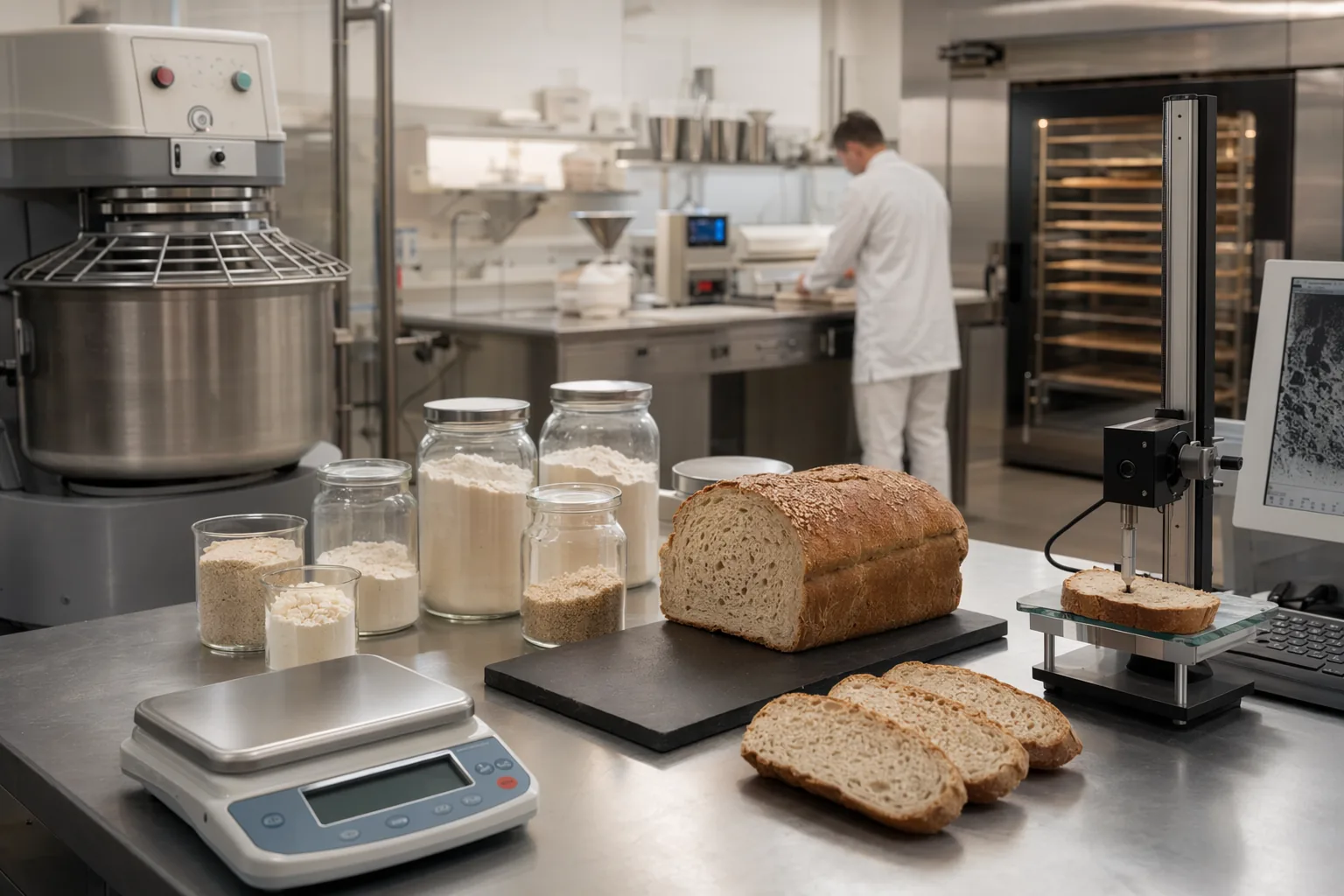
For bakeries, premix manufacturers, and ingredient blenders, alpha-amylase is a precision processing aid for dough handling, fermentation support, crumb softness, and controlled starch breakdown.
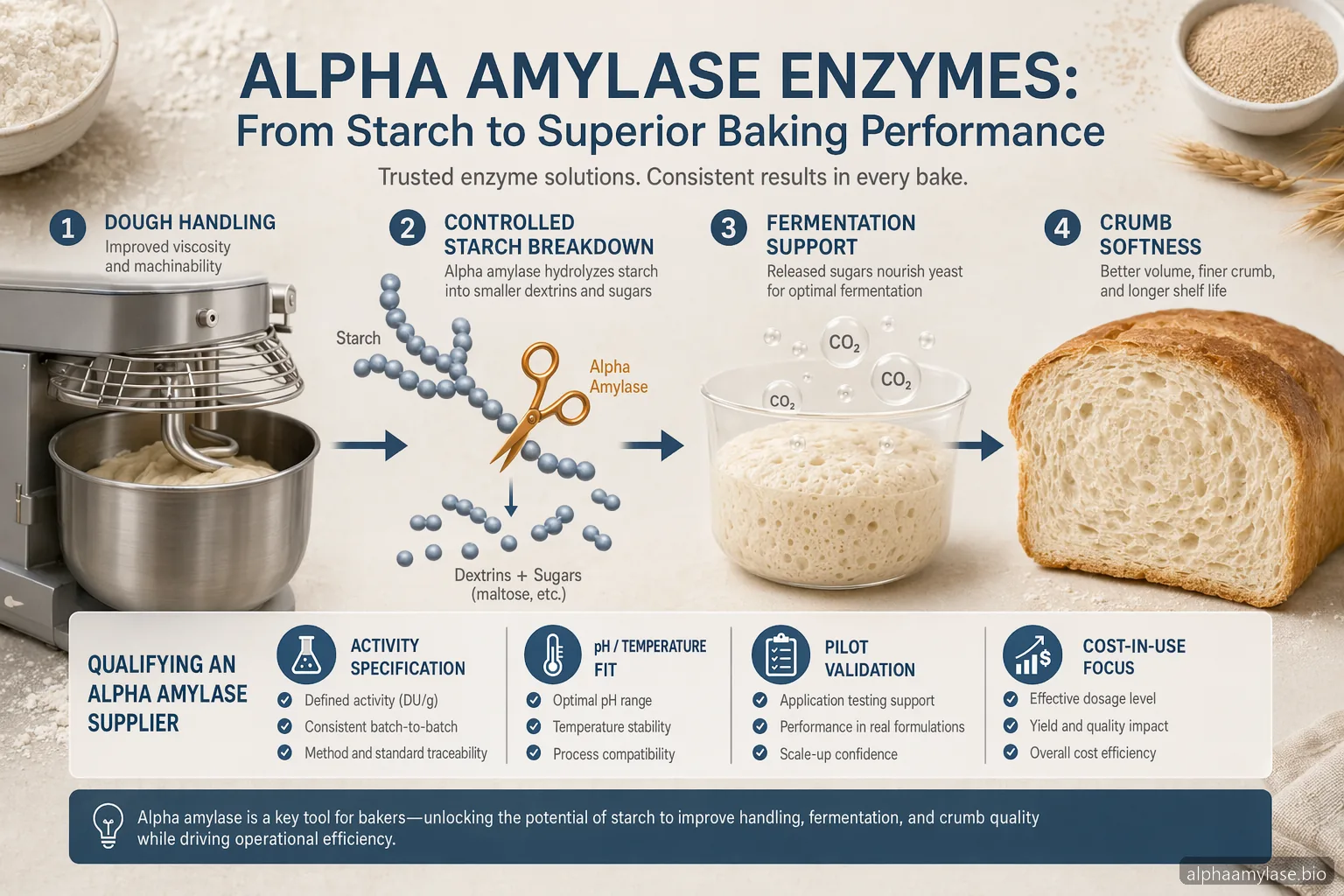
What bakery buyers need from alpha amylase enzyme suppliers
Industrial bakery teams buy alpha amylase for predictable dough performance, not for consumer health use. A qualified supplier should explain the enzyme source, activity declaration, carrier system, recommended use range, and stability profile in the actual application. In baking, alpha-amylase hydrolyzes damaged starch into smaller dextrins and fermentable sugars, helping yeast activity, crust color, loaf volume, and crumb softness when used correctly. Too little may have limited effect; too much can cause sticky dough, gummy crumb, weak sidewalls, or slicing issues. Strong alpha amylase enzyme suppliers support formulation work with technical data, representative samples, and clear documentation. Buyers should compare products on cost-in-use, not only price per kilogram, because activity strength, dilution, handling loss, and processing conditions can change the effective dose.
Ask for COA, TDS, SDS, allergen statement, and ingredient declaration. • Confirm activity units and the analytical method used. • Request a sample from a normal production batch, not only a laboratory blend. • Check compatibility with flour improvers, emulsifiers, oxidants, and yeast systems.
Formulation role of alpha-amylase in baking
Alpha-amylase is commonly used in bread, buns, rolls, sweet doughs, flatbreads, and bakery premixes where controlled starch conversion is needed. Flour quality, damaged starch level, extraction rate, whole grain content, sugar level, fermentation time, and bake profile all influence the practical dose. A fungal alpha-amylase is often selected for baking because it is generally more heat labile than many bacterial amylase options, reducing the risk of excessive starch breakdown late in baking. Bacterial amylase may be suitable in selected formulations, but it requires careful validation because higher thermal stability can extend activity. The alpha amylase protein must be treated as an active processing ingredient: small changes in dosage can create visible differences in dough extensibility, oven spring, crumb resilience, and shelf-life texture.
Typical starting trials: 5-50 ppm of active enzyme preparation on flour weight, depending on strength. • For premixes, validate distribution uniformity before scaling. • Adjust dosage when flour falling number or damaged starch changes. • Avoid assuming one dose works across all flour mills and seasons.
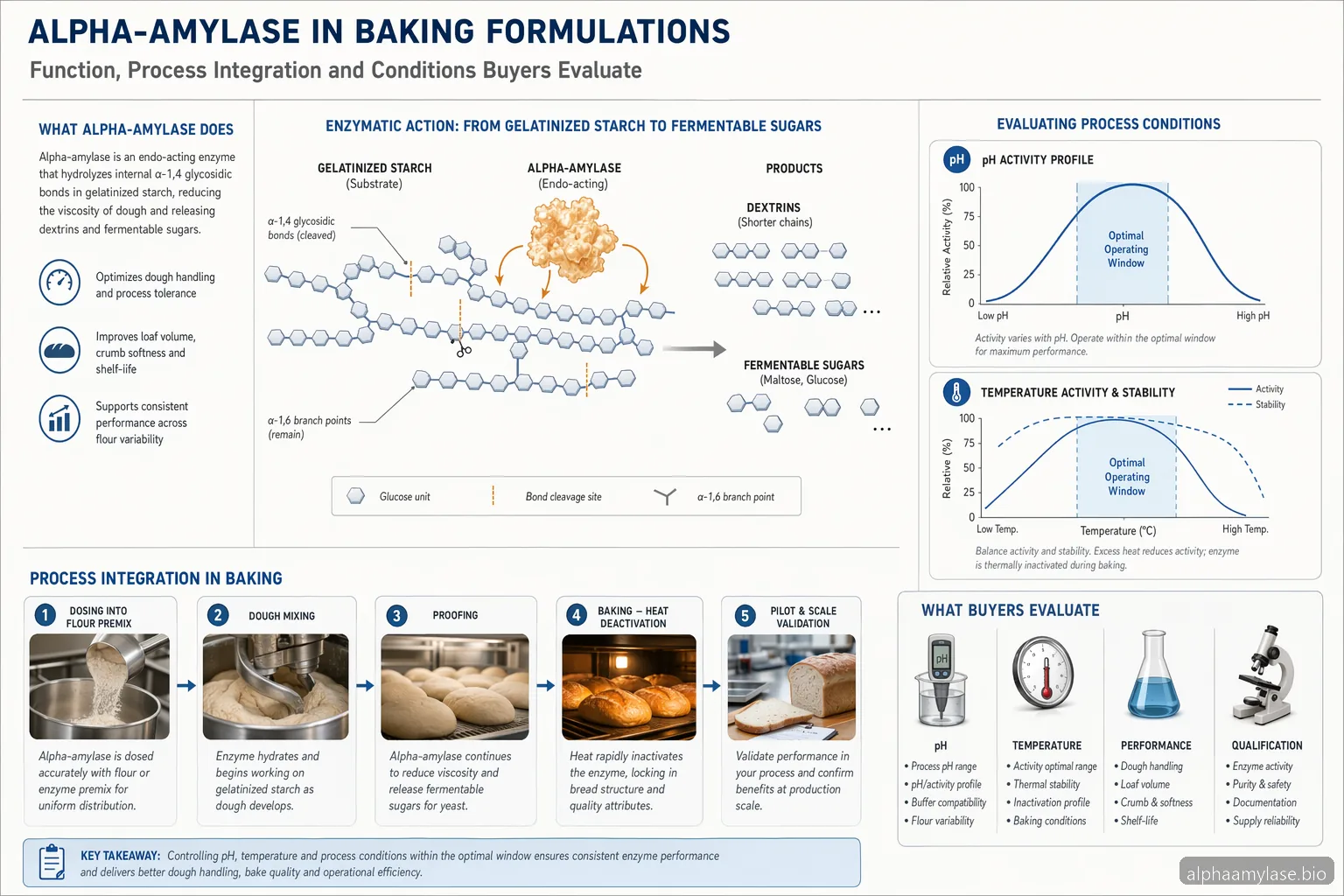
Process conditions: pH, temperature, and handling
Most baking dough systems operate near pH 5.0-6.0, which is compatible with many commercial alpha-amylase products, but the supplier TDS should define the validated working range. Fungal alpha-amylase products used in baking often show useful activity around pH 4.5-6.0 and moderate dough temperatures, while bacterial amylase may have a broader or more heat-tolerant profile. Dough mixing and fermentation temperatures commonly range from 24-38°C, depending on product type. During baking, enzyme activity declines as crumb temperature rises; heat stability differs by enzyme source and formulation. Store powdered products dry and sealed, typically below the supplier’s stated maximum temperature, and avoid humid handling areas. Liquid alpha amylase requires attention to microbial control, viscosity, dosing pump accuracy, and shelf-life after opening.
Verify optimal pH and temperature from the supplier’s TDS, not from generic references. • Use calibrated scales or metering pumps for low-dose additions. • Pre-blend powders when direct dosing accuracy is difficult. • Protect operators with handling controls described in the SDS.
Pilot validation before commercial approval
Before approving a new alpha amylase enzyme supplier, run pilot trials that mirror commercial mixing, fermentation, proofing, baking, cooling, slicing, and packaging. Start with a control batch, a low dose, a target dose, and a high dose. Record flour lot data, water absorption, dough temperature, mixing energy, proof time, loaf volume, crumb grain, crust color, sliceability, and texture over shelf life. For flour and dough QC, falling number, amylograph or RVA viscosity, pH, moisture, and water activity can help explain results. Finished product evaluation should include day-one texture and delayed checks after the normal distribution period. A supplier that helps interpret these results can reduce reformulation risk and support accurate cost-in-use calculations for plant-scale adoption.
Use the same flour lot for the first comparison. • Keep yeast, salt, sugar, fat, and oxidant levels constant. • Measure texture after cooling and during shelf-life storage. • Confirm no gummy crumb or excessive stickiness at the upper dose.
Supplier qualification and cost-in-use
The best alpha amylase enzyme suppliers provide more than a product code. Procurement and R&D teams should qualify supply reliability, lead time, minimum order quantity, packaging, technical response time, and documentation consistency. Review the COA for activity, appearance, batch number, manufacture date, shelf life, and any product-specific limits. The TDS should include application guidance, dosage range, storage, solubility or dispersibility, and compatibility notes. The SDS should be available before plant trials so EHS teams can review respiratory sensitization, dust handling, spills, and PPE requirements. Cost-in-use should be calculated as enzyme cost per tonne of flour or finished product, adjusted for activity, dosage, scrap reduction, yield, shelf-life targets, and processing efficiency. Avoid switching solely on unit price without repeating bake validation.
Compare activity-normalized cost, not only price per kilogram. • Audit documentation quality and change-notification practices. • Confirm packaging sizes fit dosing and inventory controls. • Require revalidation if activity units, carriers, or production site change.
Technical Buying Checklist
Buyer Questions
Compare suppliers by declared activity, activity test method, enzyme source, carrier system, recommended baking dosage, documentation quality, sample availability, and technical support. Ask for COA, TDS, SDS, allergen information, and storage guidance before trials. Then compare performance in your flour system through pilot baking and calculate cost per tonne of flour or finished product, not only price per kilogram.
A practical first screen is often 5-50 ppm of enzyme preparation on flour weight, but this depends strongly on product activity, flour falling number, damaged starch, fermentation time, and desired crumb softness. Use a control, low, target, and high dose in pilot trials. Final dosage should be approved only after dough handling, loaf volume, crumb texture, sliceability, and shelf-life checks.
Fungal alpha-amylase is frequently preferred in many baking applications because it is generally less heat stable than many bacterial amylase products, helping limit activity during later baking stages. Bacterial amylase can be useful in specific processes, but it may require tighter dose control. The correct choice depends on the product format, flour quality, bake profile, and the supplier’s validated performance data.
Terms such as alpha amylase 3000 may refer to an activity grade, dilution, or supplier-specific naming convention, but there is no universal meaning without the stated analytical method. Always request the COA and TDS to confirm activity units, test conditions, recommended dosage, and application fit. Do not compare two products by grade number unless the units and methods are equivalent.
No. Bakery-grade alpha amylase enzyme is an industrial food processing ingredient used in controlled formulations and manufacturing environments. Search terms such as alpha amylase sirop or sirop alpha amylase usually indicate consumer or medical-style products, which are outside industrial baking procurement. Bakeries should source food-application enzyme preparations with proper COA, TDS, SDS, labeling, and supplier support.
Alpha-Amylase for Research & Industry
Need Alpha-Amylase for your lab or production process?
ISO 9001 certified · Food-grade & research-grade · Ships to 80+ countries
Frequently Asked Questions
How do I compare alpha amylase enzyme suppliers for baking?
Compare suppliers by declared activity, activity test method, enzyme source, carrier system, recommended baking dosage, documentation quality, sample availability, and technical support. Ask for COA, TDS, SDS, allergen information, and storage guidance before trials. Then compare performance in your flour system through pilot baking and calculate cost per tonne of flour or finished product, not only price per kilogram.
What dosage of alpha-amylase should a bakery start with?
A practical first screen is often 5-50 ppm of enzyme preparation on flour weight, but this depends strongly on product activity, flour falling number, damaged starch, fermentation time, and desired crumb softness. Use a control, low, target, and high dose in pilot trials. Final dosage should be approved only after dough handling, loaf volume, crumb texture, sliceability, and shelf-life checks.
Is fungal or bacterial amylase better for baking formulations?
Fungal alpha-amylase is frequently preferred in many baking applications because it is generally less heat stable than many bacterial amylase products, helping limit activity during later baking stages. Bacterial amylase can be useful in specific processes, but it may require tighter dose control. The correct choice depends on the product format, flour quality, bake profile, and the supplier’s validated performance data.
What does alpha amylase 3000 mean on a product label?
Terms such as alpha amylase 3000 may refer to an activity grade, dilution, or supplier-specific naming convention, but there is no universal meaning without the stated analytical method. Always request the COA and TDS to confirm activity units, test conditions, recommended dosage, and application fit. Do not compare two products by grade number unless the units and methods are equivalent.
Is industrial alpha amylase the same as alpha amylase sirop or sirop alpha amylase?
No. Bakery-grade alpha amylase enzyme is an industrial food processing ingredient used in controlled formulations and manufacturing environments. Search terms such as alpha amylase sirop or sirop alpha amylase usually indicate consumer or medical-style products, which are outside industrial baking procurement. Bakeries should source food-application enzyme preparations with proper COA, TDS, SDS, labeling, and supplier support.
Related: Alpha Amylase for Baking Bread — Dough Conditioning and Shelf Life
Turn This Guide Into a Supplier Brief Request a baking-grade alpha-amylase sample, COA/TDS/SDS package, and pilot trial support for your flour system. See our application page for Alpha Amylase for Baking Bread — Dough Conditioning and Shelf Life at /applications/alpha-amylase-bread-dough-conditioning/ for specs, MOQ, and a free 50 g sample.
Contact Us to Contribute