Alpha Amylase Protein for Industrial Baking
B2B guide to alpha amylase protein for baking: dosage, pH, temperature, QC checks, pilot trials, COA/TDS/SDS, and suppliers.
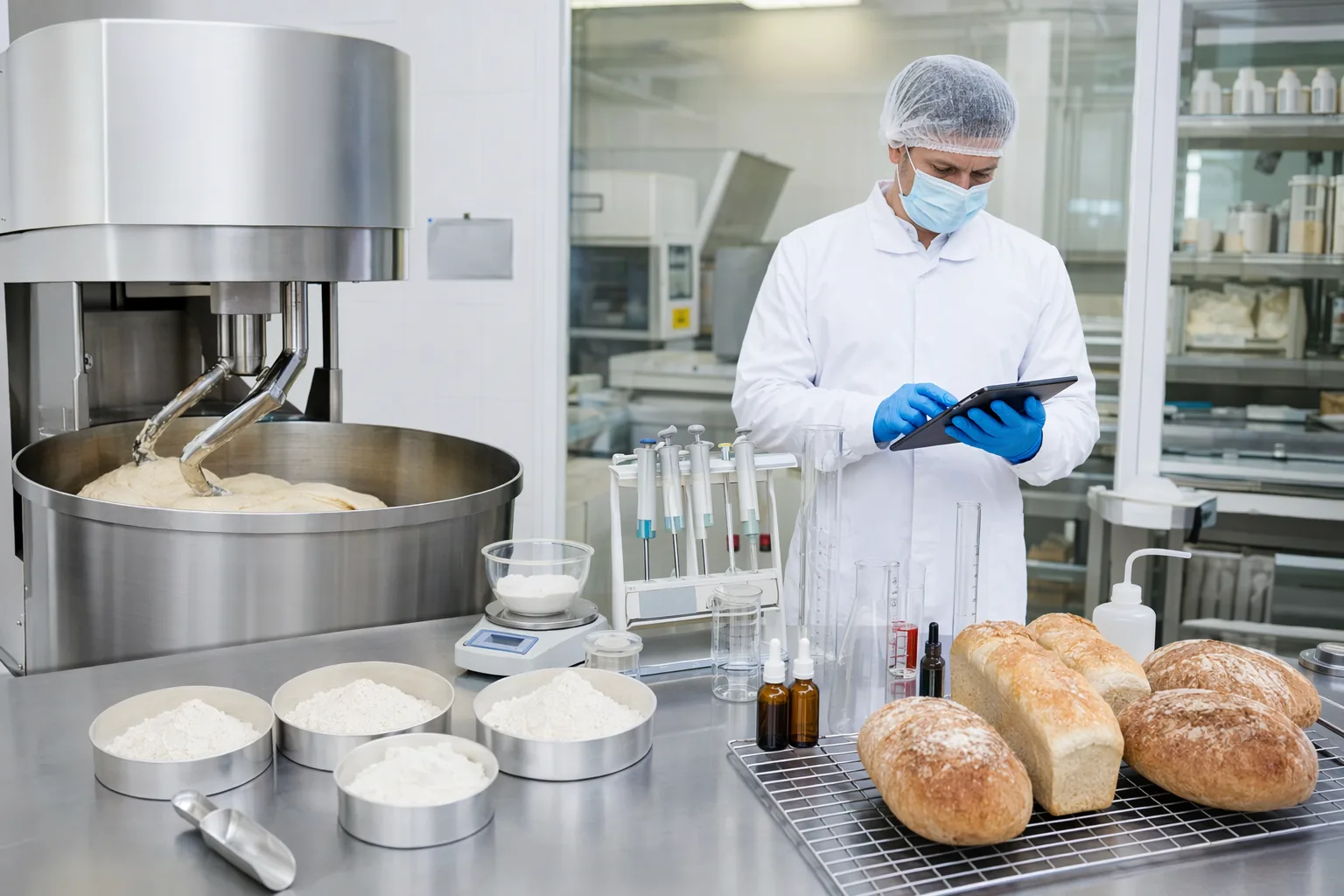
A practical process guide for bakery manufacturers evaluating alpha amylase enzyme systems for dough handling, fermentation support, loaf volume, crumb softness, and cost-in-use control.
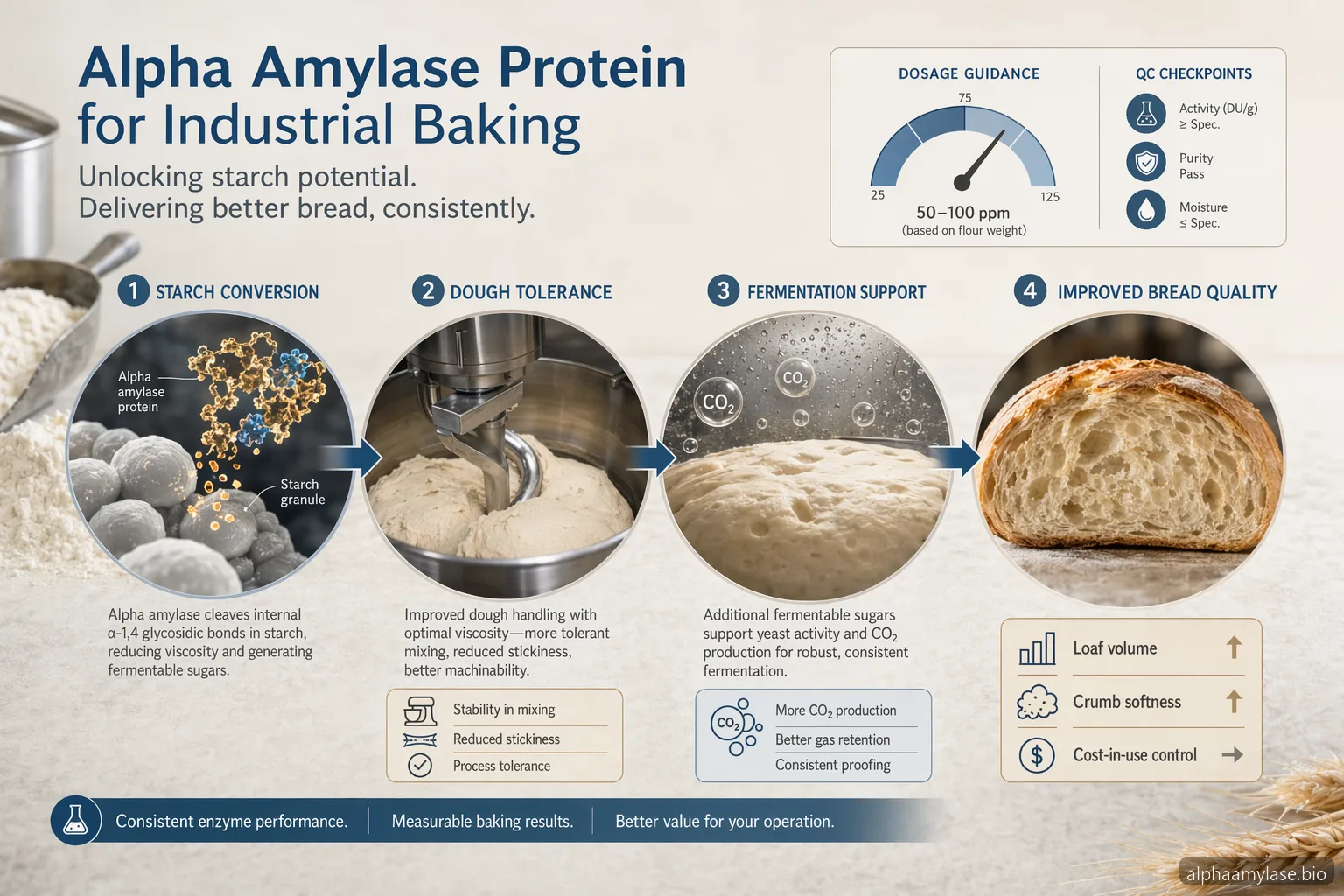
What Alpha Amylase Protein Does in Baking
Alpha amylase protein hydrolyzes starch into shorter dextrins and fermentable sugars. In bread, buns, rolls, crackers, and sweet goods, controlled starch breakdown can support yeast activity, crust color, loaf volume, and crumb softness. The right alpha amylase enzyme also helps normalize flour variability, especially when natural cereal amylase activity changes by crop, mill stream, or storage conditions. For industrial buyers, the key is not simply finding a high-activity alpha amylase, but matching the enzyme profile to flour, formula, mixing time, proofing, bake temperature, and shelf-life targets. Fungal alpha-amylase is often preferred for pan bread and similar products because its activity typically declines during baking. More heat-stable bacterial amylase may be useful in selected applications, but overuse can create sticky dough, weak structure, or gummy crumb.
Primary substrate: gelatinizing wheat starch and damaged starch. • Typical targets: fermentation support, color, volume, and crumb texture. • Risk control: avoid excessive dextrin formation and residual activity.
Recommended Process Conditions and Dosage Approach
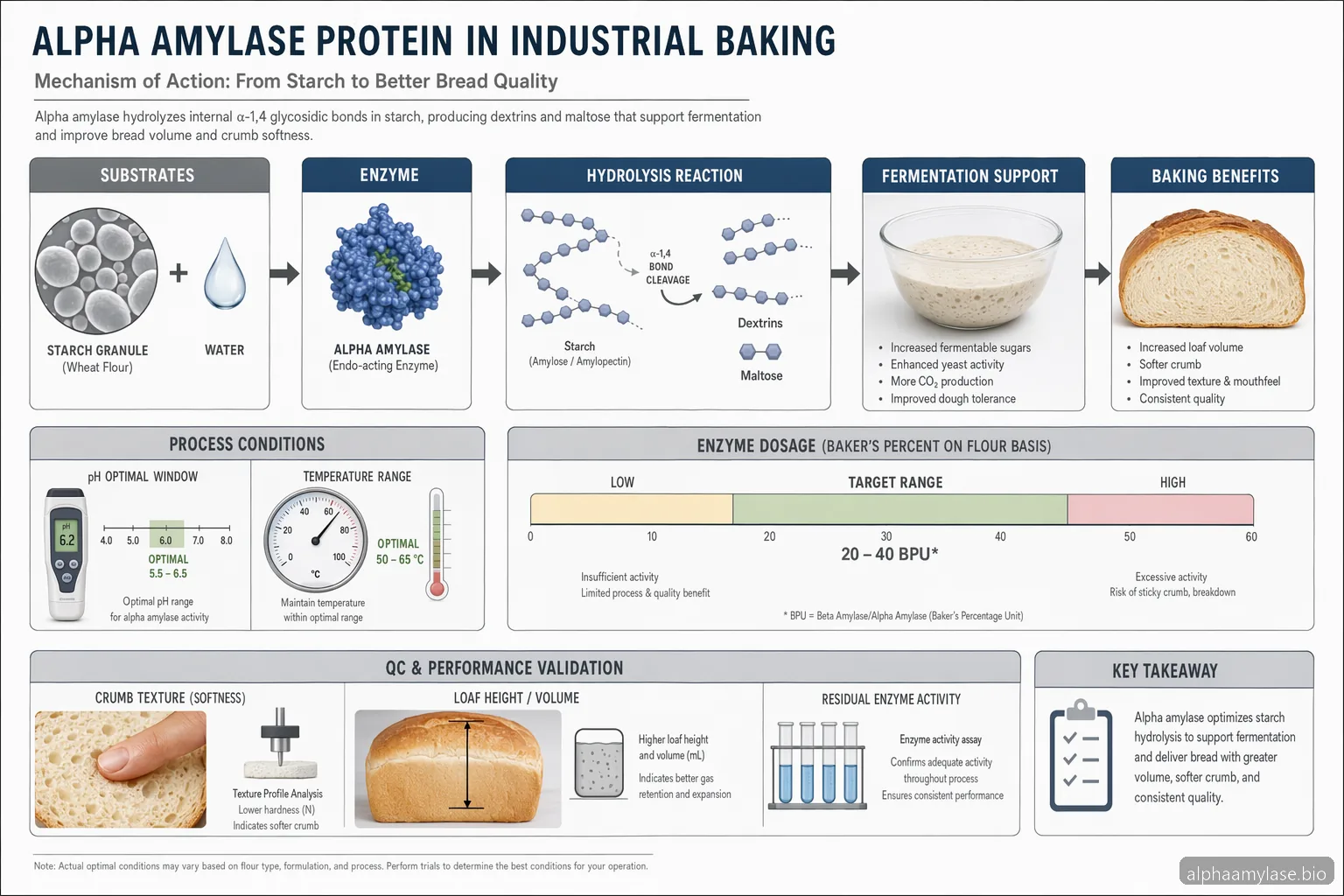
Process conditions should be confirmed against the supplier TDS because activity units are not interchangeable. As a practical starting point, many bakery alpha amylase protein preparations are evaluated across pH 4.5 to 6.0, with meaningful dough-stage activity around 25 to 45 degrees Celsius and peak activity often reported near 45 to 60 degrees Celsius for fungal types. Bacterial amylase products may show broader pH tolerance and higher thermal stability, so use them cautiously in bread systems. Initial bakery trials often begin at 5 to 50 g of enzyme preparation per 100 kg flour, or at an activity-based dose recommended by the supplier. Adjust by flour Falling Number, sugar level, proof time, bake profile, and product softness target. Run at least one low, mid, and high dose before scale-up.
Confirm dosage by declared activity unit, not product weight alone. • Dose on flour weight unless the TDS specifies otherwise. • Use lower starting doses for long fermentation or high damaged-starch flour. • Document dough temperature, proof time, and bake endpoint.
QC Checks for Pilot Validation
Pilot validation should connect enzyme dose to measurable quality outcomes. Incoming flour can be screened using Falling Number, damaged starch, moisture, ash, and protein. For amylase-sensitive formulations, RVA or amylograph data help show starch viscosity changes before baking. During trials, track mix tolerance, dough stickiness, proof height, oven spring, loaf volume, crust color, sliceability, and crumb structure. Finished bread should be checked over shelf life with crumb firmness, moisture migration, sensory notes, and signs of gumminess. A useful alpha amylase 3000 or similar activity label only becomes meaningful when the activity method is identified and correlated to your bake results. Keep a retained sample from each enzyme lot and compare new lots against a qualified benchmark.
Incoming flour: Falling Number and damaged starch. • Process: dough temperature, stickiness, proof performance. • Finished goods: volume, color, crumb grain, firmness, shelf life. • Lot control: retain samples and compare batch-to-batch performance.
How to Compare Industrial Alpha Amylase Suppliers
A qualified alpha amylase supplier should provide a current Certificate of Analysis, Technical Data Sheet, Safety Data Sheet, storage guidance, shelf-life statement, allergen information, country of origin, and lot traceability. The COA should state activity, method reference where available, appearance, microbiological limits, and batch identification. The TDS should identify recommended pH, temperature, dosage, formulation compatibility, and handling instructions. For B2B purchasing, also compare lead time, packaging size, enzyme concentration, minimum order quantity, documentation responsiveness, and technical service. Cost-in-use is more important than price per kilogram because two alpha-amylase products with different activity units, carrier systems, and stability profiles can perform very differently in the same dough. Supplier qualification should include pilot data, regulatory review, and at least one controlled production trial.
Request COA, TDS, SDS, and traceability before purchase. • Compare activity method and application performance, not only price. • Validate packaging and storage for your plant conditions. • Use production trials before long-term supply approval.
Clarifying Search Terms and Non-Medical Use
This page addresses industrial alpha amylase protein for baking applications, not digestive products, pharmaceutical syrups, or consumer supplement advice. Search phrases such as alpha amylase sirop, sirop alpha amylase, and alpha amylase werte often relate to non-industrial or diagnostic contexts, whereas bakery procurement requires process data, food application performance, and supplier documentation. For bakeries, the practical question is whether the enzyme improves product quality within a controlled dose window and does not create processing defects. The best selection depends on flour variability, fermentation design, product format, thermal inactivation, and local regulatory requirements. Always evaluate an alpha amylase enzyme under your own formula, equipment, and bake profile before approving it for commercial production.
Industrial baking use is different from medical or diagnostic contexts. • Use plant trials rather than generic internet dosage claims. • Confirm local regulatory suitability with your compliance team.
Technical Buying Checklist
Buyer Questions
In baking, alpha amylase protein breaks starch into dextrins and sugars that can support yeast fermentation, crust color, loaf volume, and crumb softness. It is used to standardize flour performance and improve process consistency. The effect depends on flour quality, enzyme source, activity level, fermentation time, and bake profile, so commercial bakeries should validate each product through controlled pilot and production trials.
Bacterial amylase can be suitable in selected bakery systems, but many bacterial products are more heat-stable than fungal alpha-amylase. If activity remains too long during baking, the crumb may become sticky or gummy. For bread and buns, evaluate bacterial amylase at conservative doses, confirm thermal behavior from the TDS, and run shelf-life checks before approving it for routine production.
Start with the supplier’s activity-based recommendation, then test low, medium, and high dosages under your normal formula and process. If only a weight range is available, many bakeries screen around 5 to 50 g per 100 kg flour for concentrated preparations, but this varies widely. Track dough handling, proofing, loaf volume, crumb texture, and shelf-life firmness before selecting a dose.
Request a COA for the specific lot, a TDS with activity method and recommended conditions, an SDS for safe handling, storage and shelf-life guidance, allergen information, and traceability details. For supplier qualification, also ask about packaging, lead time, batch consistency, change notification, and technical support. Documentation should be reviewed before pilot trials and again before full commercial approval.
Calculate cost-in-use from the validated dose, not from the enzyme price per kilogram alone. Convert dosage to cost per 100 kg flour, per batch, or per finished tonne, then include yield impact, waste reduction, shelf-life improvement, and any handling costs. Products with higher price can be more economical if they deliver the required bake performance at a lower or more stable dose.
Alpha-Amylase for Research & Industry
Need Alpha-Amylase for your lab or production process?
ISO 9001 certified · Food-grade & research-grade · Ships to 80+ countries
Frequently Asked Questions
What is alpha amylase protein used for in industrial baking?
In baking, alpha amylase protein breaks starch into dextrins and sugars that can support yeast fermentation, crust color, loaf volume, and crumb softness. It is used to standardize flour performance and improve process consistency. The effect depends on flour quality, enzyme source, activity level, fermentation time, and bake profile, so commercial bakeries should validate each product through controlled pilot and production trials.
Is bacterial amylase suitable for bread and bun production?
Bacterial amylase can be suitable in selected bakery systems, but many bacterial products are more heat-stable than fungal alpha-amylase. If activity remains too long during baking, the crumb may become sticky or gummy. For bread and buns, evaluate bacterial amylase at conservative doses, confirm thermal behavior from the TDS, and run shelf-life checks before approving it for routine production.
How should we set the first alpha amylase dosage trial?
Start with the supplier’s activity-based recommendation, then test low, medium, and high dosages under your normal formula and process. If only a weight range is available, many bakeries screen around 5 to 50 g per 100 kg flour for concentrated preparations, but this varies widely. Track dough handling, proofing, loaf volume, crumb texture, and shelf-life firmness before selecting a dose.
What documents should a B2B buyer request from an alpha amylase supplier?
Request a COA for the specific lot, a TDS with activity method and recommended conditions, an SDS for safe handling, storage and shelf-life guidance, allergen information, and traceability details. For supplier qualification, also ask about packaging, lead time, batch consistency, change notification, and technical support. Documentation should be reviewed before pilot trials and again before full commercial approval.
How do we calculate cost-in-use for alpha amylase enzyme?
Calculate cost-in-use from the validated dose, not from the enzyme price per kilogram alone. Convert dosage to cost per 100 kg flour, per batch, or per finished tonne, then include yield impact, waste reduction, shelf-life improvement, and any handling costs. Products with higher price can be more economical if they deliver the required bake performance at a lower or more stable dose.
Related: Alpha Amylase for Baking Bread — Dough Conditioning and Shelf Life
Turn This Guide Into a Supplier Brief Request a baking alpha amylase sample, COA, TDS, SDS, and pilot-trial support for your flour system. See our application page for Alpha Amylase for Baking Bread — Dough Conditioning and Shelf Life at /applications/alpha-amylase-bread-dough-conditioning/ for specs, MOQ, and a free 50 g sample.
Contact Us to Contribute