Alpha Amylase Enzyme Brewing: Dosage, pH, and Temperature Troubleshooting
Troubleshoot alpha amylase enzyme brewing with practical pH, temperature, dosage, QC checks, COA/TDS/SDS review, and pilot trials.
A practical B2B guide for brewers using industrial alpha-amylase to improve starch conversion, manage adjuncts, and reduce process variation.
Why alpha-amylase matters in brewhouse troubleshooting
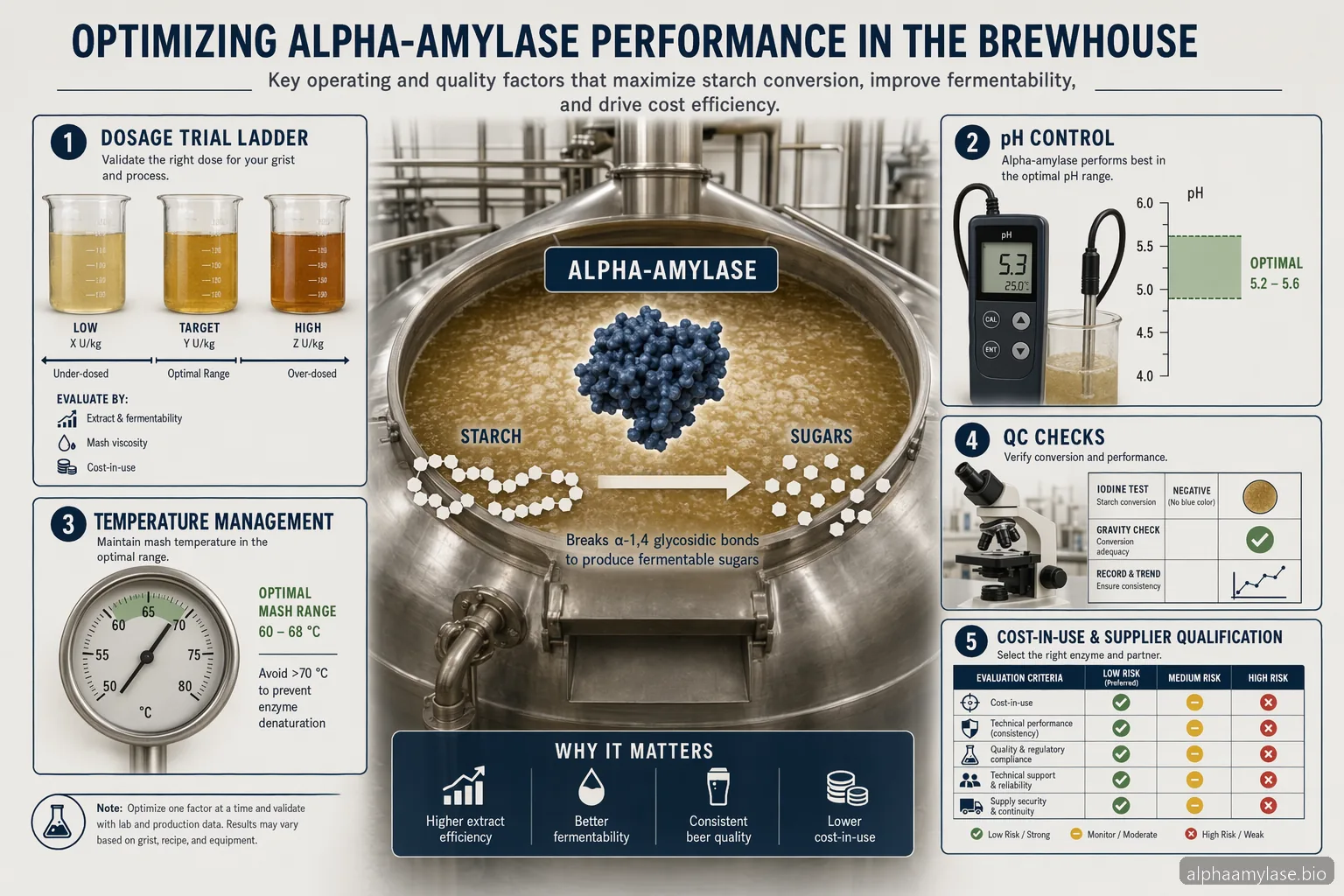
Alpha-amylase is the endo-acting alpha amylase protein that cuts internal alpha-1,4 glycosidic bonds in gelatinized starch, rapidly reducing mash viscosity and creating shorter dextrins for downstream conversion. In brewing, an alpha amylase enzyme is commonly evaluated when high adjunct usage, variable malt diastatic power, slow runoff, low extract, or incomplete iodine conversion is limiting throughput. Bacterial amylase products can be especially useful in high-temperature liquefaction steps for cereal cookers and adjunct mashes, while malt enzymes remain important in traditional infusion programs. The correct alpha-amylase choice depends on raw material, temperature profile, pH, calcium level, residence time, and desired wort profile. For industrial alpha amylase enzyme brewing, the goal is not simply more enzyme; it is repeatable starch conversion with controlled fermentability, predictable attenuation, and stable cost per hectoliter.
Common triggers: low extract, viscous mash, haze risk, slow lauter, adjunct inconsistency. • Match enzyme type to mash temperature, pH, and grist composition. • Confirm results with plant data, not only laboratory activity units.
Dosage strategy for brewing trials
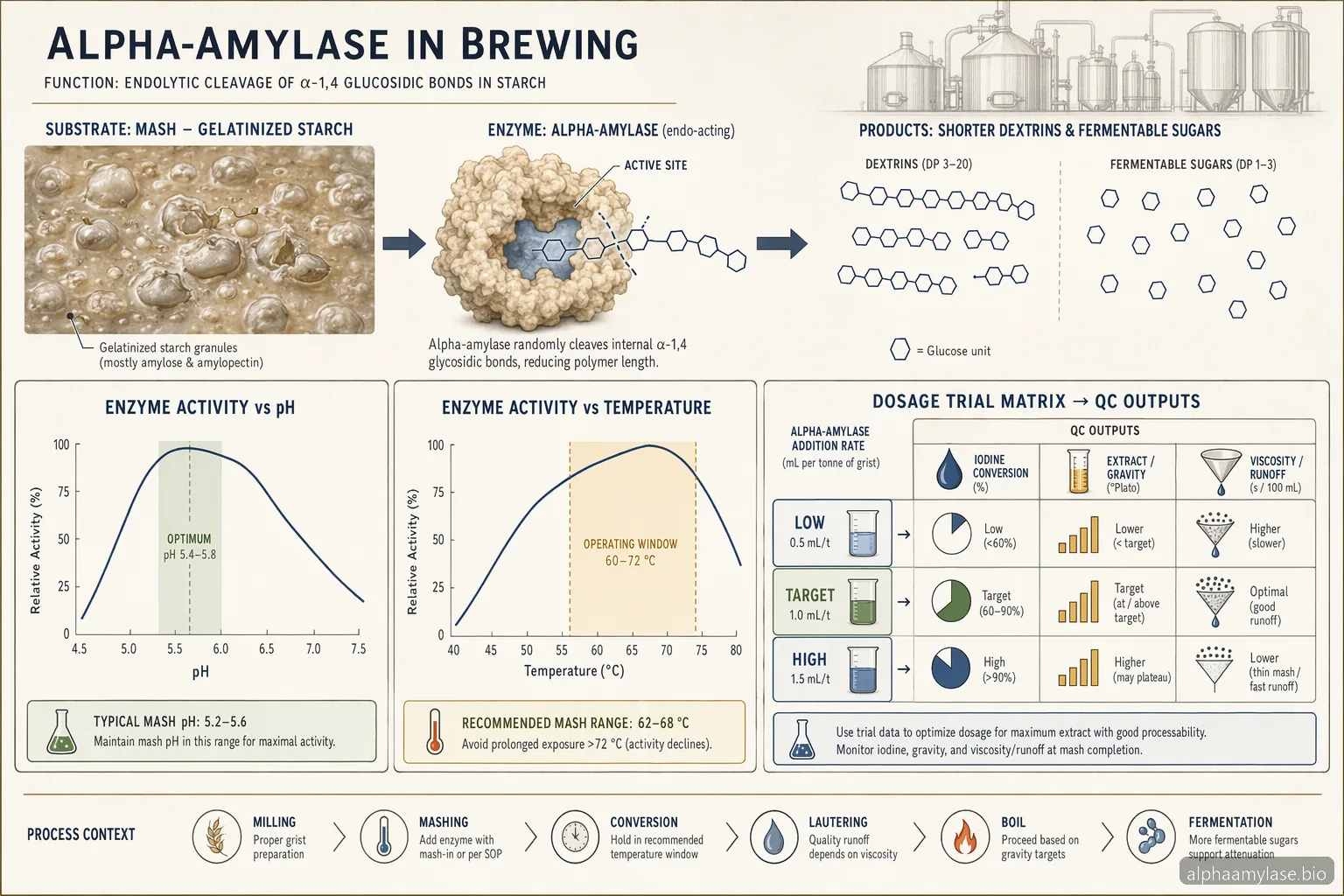
Dosage should be based on enzyme activity, substrate load, and process residence time rather than a generic addition rate. Many industrial alpha amylase products are trialed in broad ranges such as 0.02-0.20 kg per metric ton of grist or adjunct, but the supplier TDS and declared activity must define the starting point. Products described in the market as alpha amylase 3000 may refer to an activity grade, dilution, or local naming convention, so buyers should confirm units, assay method, and dose equivalence on the COA. Begin with a small pilot matrix at low, mid, and high dose, then measure extract, iodine response, viscosity, lautering time, and fermentability. Overdosing may increase dextrin breakdown beyond the intended beer profile or add unnecessary cost. Underdosing usually appears as residual starch, weak extract, or unstable runoff.
Run at least three dose levels before scale-up. • Normalize dosage to enzyme activity units, not only kilograms or liters. • Check whether the product is liquid or granular for metering accuracy.
pH and temperature conditions to verify
For most alpha amylase enzyme brewing applications, useful mash performance is commonly found around pH 5.4-6.2, with temperature windows often near 70-90°C for thermostable bacterial amylase. Malt-derived enzymes may prefer lower temperature rests, while high-temperature bacterial alpha-amylase can tolerate cereal cooking or liquefaction conditions better. Exact limits vary by strain, formulation, stabilizers, and calcium requirement, so the supplier TDS should be treated as the operating reference. If conversion is slow, do not adjust enzyme dosage before checking mash pH, thermometer calibration, hold time, grist hydration, and whether starch has fully gelatinized. In cereal adjunct processes, the enzyme must contact gelatinized starch long enough to reduce viscosity before transfer. If pH falls outside the active window, conversion may stall even when the dose appears sufficient.
Verify actual mash pH at process temperature or use corrected readings. • Confirm starch gelatinization for maize, rice, wheat, or other adjuncts. • Check calcium guidance if the selected alpha-amylase requires stabilization.
Quality control checks after enzyme addition
A troubleshooting program should connect enzyme addition to measurable brewhouse outcomes. Iodine testing is a fast screen for residual starch, but it should be paired with extract measurement, wort viscosity, lauter cycle time, turbidity, fermentability, and final beer specification. For adjunct-heavy recipes or high-gravity brewing, monitor whether dextrin distribution shifts in a way that affects mouthfeel or attenuation. Record the alpha-amylase batch number, storage age, addition point, mash pH, hold temperature, and hold time for each trial. If results vary, compare the enzyme COA against receiving records and confirm that the product was not exposed to excessive heat during storage. In some markets, buyers search terms like sirop alpha amylase or alpha amylase sirop when working with syrup adjuncts; the same principle applies: validate conversion and viscosity under real process conditions.
Use iodine as a screen, not the only release criterion. • Trend extract, viscosity, runoff time, and fermentability together. • Retain enzyme batch records for root-cause analysis.
Supplier qualification and cost-in-use
For B2B procurement, the lowest price per kilogram is rarely the lowest process cost. A qualified alpha amylase supplier should provide a current COA for each lot, a TDS with activity units and recommended process range, an SDS for handling, and documentation on storage, shelf life, and food-grade suitability where relevant. Ask for pilot support, sample retention policy, allergen or processing-aid statements if needed for your market, and evidence of batch-to-batch consistency. Cost-in-use should include dose required, extract gain, lauter time reduction, filtration impact, losses, downtime, and inventory stability. Before approving an alpha-amylase supply change, run side-by-side plant or pilot trials using the same grist and mash profile. A technically responsive supplier can help convert lab activity data into practical plant dosing without making unsupported performance claims.
Request COA, TDS, SDS, shelf-life, storage, and handling documents. • Evaluate supplier responsiveness during troubleshooting, not only quotation speed. • Approve by cost-in-use and process stability, not unit price alone.
Technical Buying Checklist
Buyer Questions
Common causes include mash pH outside the active range, insufficient gelatinization of adjunct starch, inadequate hold time, poor enzyme mixing, incorrect dosage normalization, or enzyme deactivation from excessive heat. Check thermometer calibration, pH measurement method, grist hydration, and the supplier TDS before increasing dosage. Iodine testing should be supported by extract, viscosity, and lautering data.
Set dosage by enzyme activity units, substrate load, process temperature, pH, and residence time. A practical approach is to run low, medium, and high pilot doses around the supplier’s recommended range, then compare extract, iodine conversion, viscosity, lauter time, fermentability, and final beer targets. Avoid approving dosage from generic labels such as alpha amylase 3000 without confirming the assay basis.
Bacterial amylase is often selected for adjunct or cereal cooker steps because many grades are thermostable and effective during starch liquefaction. Suitability depends on the exact strain, formulation, pH range, temperature tolerance, and the beer profile required. Review the TDS, run pilot trials with your adjunct source, and confirm that the resulting wort meets extract, filtration, and fermentability targets.
A qualified supplier should provide a lot-specific COA, technical data sheet, safety data sheet, storage and shelf-life guidance, and traceability information. Depending on your market, you may also request food-processing statements, allergen information, and sample retention details. These documents help procurement, QA, and production teams compare products and troubleshoot batch variation.
Yes. Alpha-amylase mainly produces dextrins by cutting starch chains, but dosage, temperature, time, and interaction with other enzymes can shift wort carbohydrate distribution. This may affect fermentability, attenuation, body, and filtration behavior. For that reason, brewing trials should evaluate both brewhouse efficiency and finished beer specifications before changing the enzyme grade or dosage.
Alpha-Amylase for Research & Industry
Need Alpha-Amylase for your lab or production process?
ISO 9001 certified · Food-grade & research-grade · Ships to 80+ countries
Frequently Asked Questions
What causes poor starch conversion even after adding alpha amylase?
Common causes include mash pH outside the active range, insufficient gelatinization of adjunct starch, inadequate hold time, poor enzyme mixing, incorrect dosage normalization, or enzyme deactivation from excessive heat. Check thermometer calibration, pH measurement method, grist hydration, and the supplier TDS before increasing dosage. Iodine testing should be supported by extract, viscosity, and lautering data.
How should we set alpha amylase dosage in a brewery?
Set dosage by enzyme activity units, substrate load, process temperature, pH, and residence time. A practical approach is to run low, medium, and high pilot doses around the supplier’s recommended range, then compare extract, iodine conversion, viscosity, lauter time, fermentability, and final beer targets. Avoid approving dosage from generic labels such as alpha amylase 3000 without confirming the assay basis.
Is bacterial amylase suitable for brewing adjunct mashes?
Bacterial amylase is often selected for adjunct or cereal cooker steps because many grades are thermostable and effective during starch liquefaction. Suitability depends on the exact strain, formulation, pH range, temperature tolerance, and the beer profile required. Review the TDS, run pilot trials with your adjunct source, and confirm that the resulting wort meets extract, filtration, and fermentability targets.
What documents should an industrial alpha amylase supplier provide?
A qualified supplier should provide a lot-specific COA, technical data sheet, safety data sheet, storage and shelf-life guidance, and traceability information. Depending on your market, you may also request food-processing statements, allergen information, and sample retention details. These documents help procurement, QA, and production teams compare products and troubleshoot batch variation.
Can alpha-amylase change beer attenuation or mouthfeel?
Yes. Alpha-amylase mainly produces dextrins by cutting starch chains, but dosage, temperature, time, and interaction with other enzymes can shift wort carbohydrate distribution. This may affect fermentability, attenuation, body, and filtration behavior. For that reason, brewing trials should evaluate both brewhouse efficiency and finished beer specifications before changing the enzyme grade or dosage.
Related: Thermostable Alpha-Amylase for Fast Starch Breakdown
Turn This Guide Into a Supplier Brief Request a brewing alpha-amylase sample, TDS, SDS, and pilot dosage support for your mash profile. See our application page for Thermostable Alpha-Amylase for Fast Starch Breakdown at /applications/alpha-amylase-brewing-syrups-liquefactio/ for specs, MOQ, and a free 50 g sample.
Contact Us to Contribute