Alpha Amylase Maxilase: How to Use Alpha-Amylase in Baking Formulations
B2B guide to alpha amylase maxilase in baking: dosage, pH, temperature, QC, COA/TDS/SDS, validation, and supplier qualification.
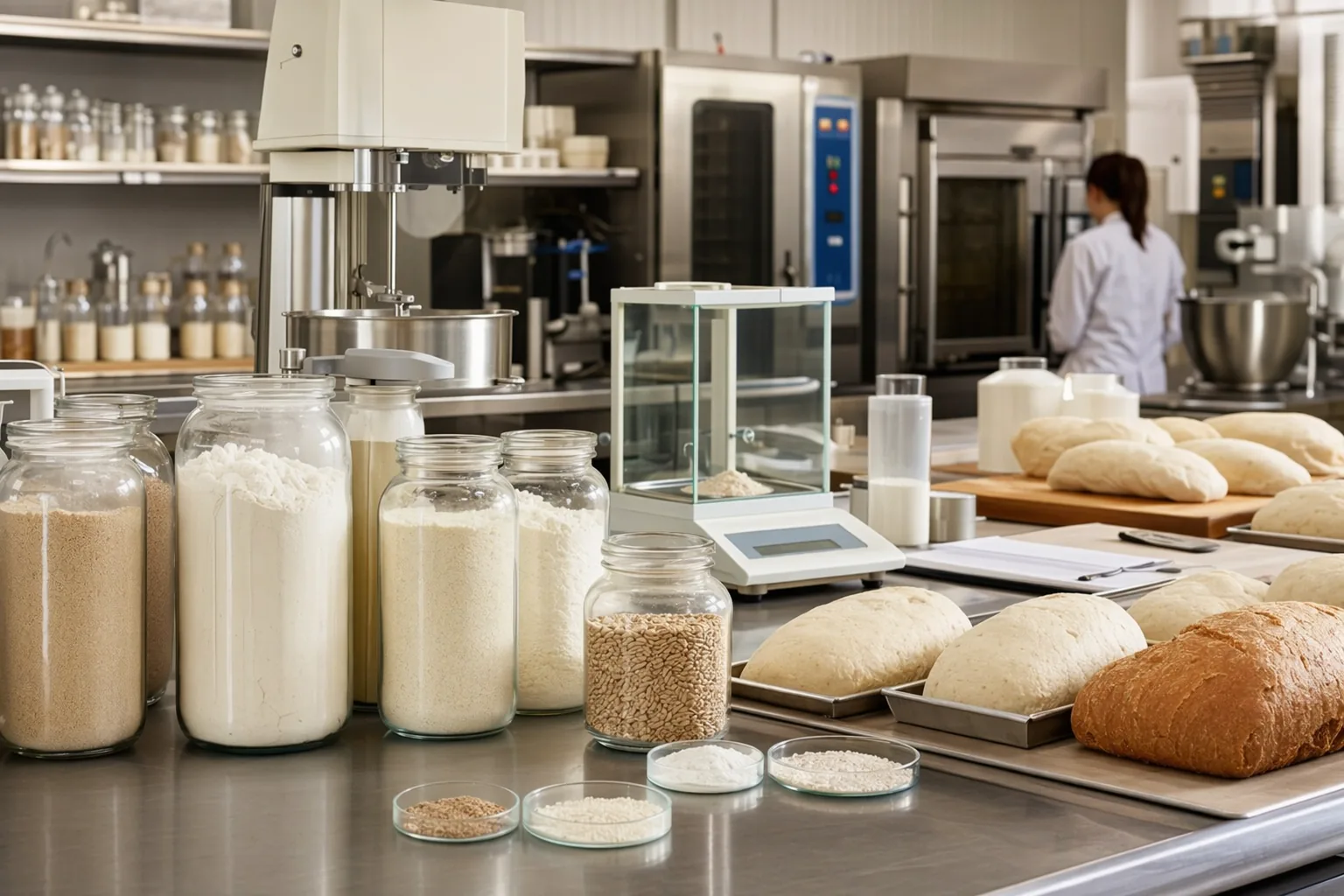
A practical formulation guide for bakeries, premix producers, and ingredient buyers evaluating alpha amylase enzyme performance, dosage, quality controls, and supplier documentation.
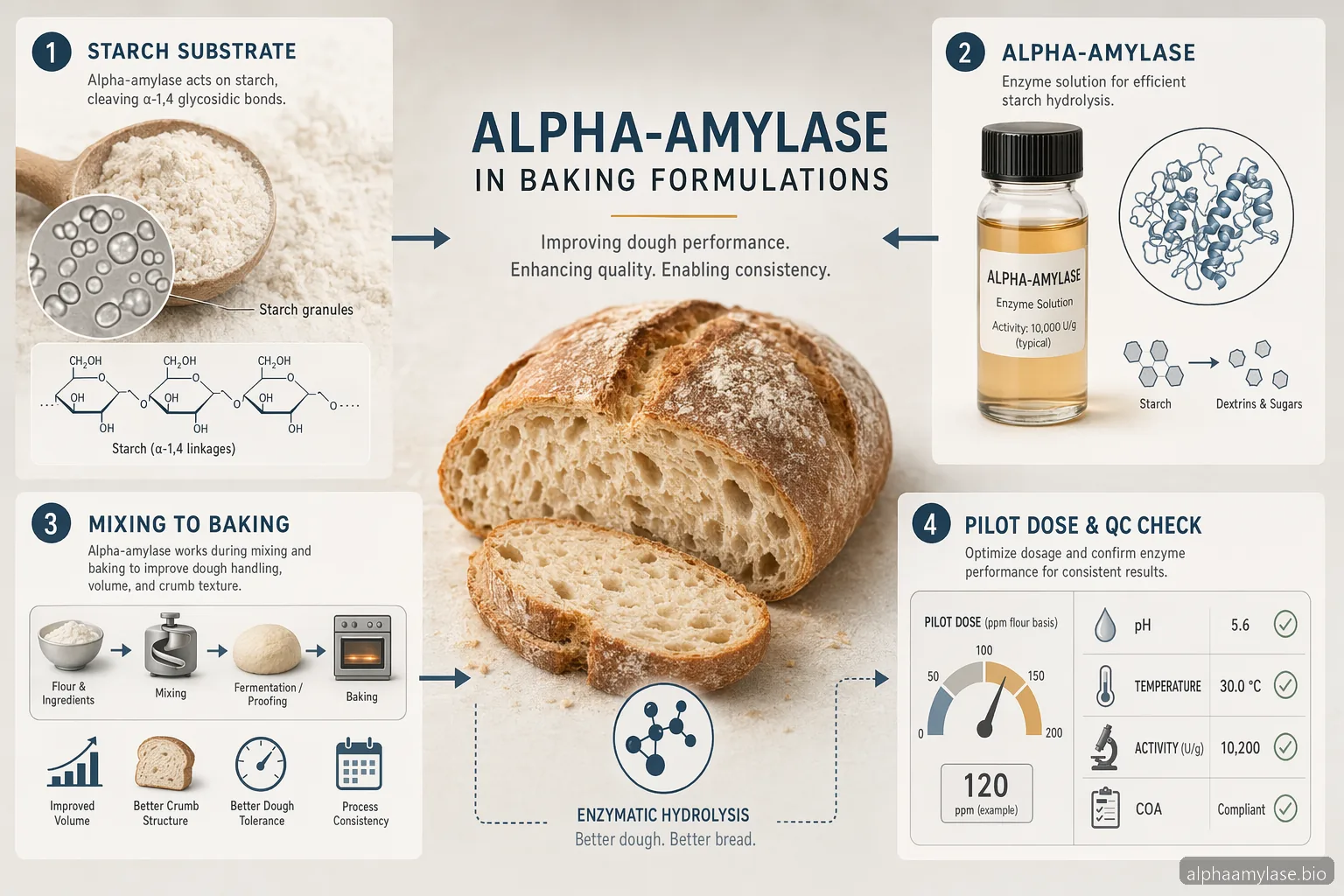
What buyers mean by alpha amylase maxilase
In industrial baking, searches for alpha amylase maxilase usually indicate a need for an alpha amylase enzyme that improves dough fermentation, crust color, loaf volume, and crumb softness. This is a formulation topic, not medical supplement or sirop alpha amylase advice. The relevant purchasing question is which alpha-amylase type, activity strength, carrier system, and dosage window fit the flour and process. Alpha amylase protein hydrolyzes alpha-1,4 glycosidic bonds in starch, creating maltose, glucose, and shorter dextrins. In pan bread, buns, toast bread, tortillas, and steamed breads, this can help compensate for low damaged-starch availability or variable flour enzyme activity. Buyers should compare maxilase alpha amylase search results with industrial baking-grade specifications, because activity units, thermal stability, and side activities vary significantly between products.
Industrial use: baking formulation and process control • Primary substrate: damaged starch in wheat or blended flour • Key outputs: fermentable sugars, dextrins, improved crumb texture • Not equivalent to alpha amylase sirop or consumer health products
Functional role in baking systems
Alpha amylase supports yeast performance by releasing fermentable sugars during mixing, floor time, proofing, and early baking. In formulas with low natural diastatic activity, the enzyme can improve oven spring and browning by increasing sugar availability for fermentation and Maillard reactions. It may also delay crumb firming by generating dextrins that interfere with starch retrogradation. However, excessive dosage can create sticky dough, gummy crumb, weak sliceability, or dark crust. The correct level depends on flour Falling Number, damaged starch, process duration, sugar level, fat level, and whether other enzymes are present. Fungal alpha-amylase is common in bread because it is usually less heat-stable than bacterial amylase, reducing the risk of residual activity after baking. Bacterial amylase may be useful in selected applications but requires tighter thermal and dosage validation.
Supports yeast gas production in lean and enriched doughs • Improves crust color where reducing sugars are limited • Can improve crumb softness when correctly dosed • Overdosing may cause gumminess or dough slackening
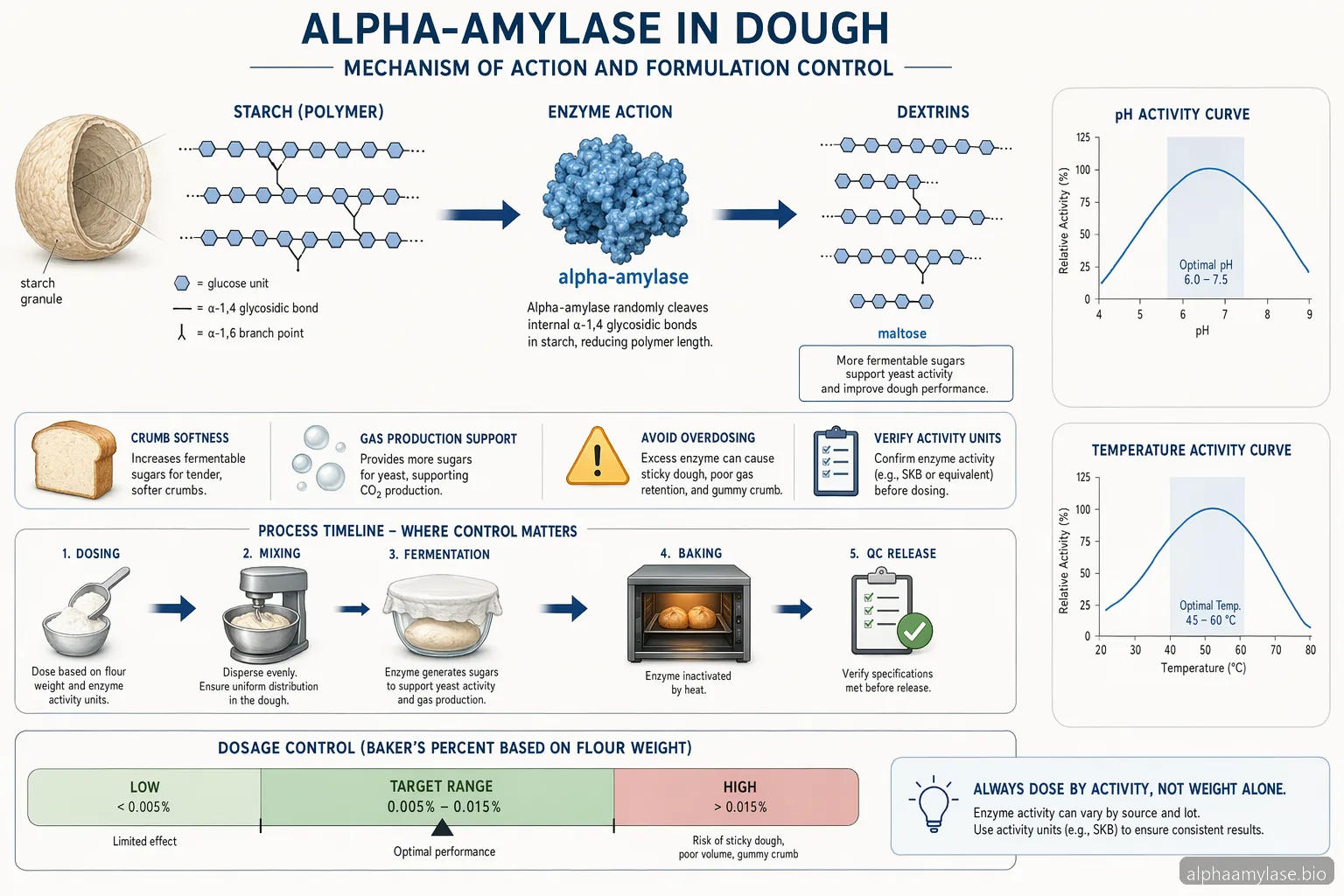
Process conditions and starting dosage bands
For most yeast-leavened wheat doughs, alpha amylase performs within typical dough pH conditions of about 5.0 to 6.2. Mixing and makeup commonly occur near 20 to 30°C, while proofing may run around 30 to 40°C depending on product style. Enzyme action continues until heat inactivation during baking; crumb temperatures above roughly 80 to 95°C reduce activity, but exact inactivation depends on enzyme source and stability. As a conservative starting point, many bakeries screen concentrated baking-grade alpha amylase at about 5 to 50 g per metric ton of flour, or use supplier activity-based guidance when available. Labels such as alpha amylase 3000 should not be compared by name alone; confirm the activity unit, assay method, and recommended flour-basis dosage. Always run a dose-response ladder before plant implementation.
Typical dough pH: approximately 5.0 to 6.2 • Typical proof temperature: approximately 30 to 40°C • Indicative screening band: 5 to 50 g per metric ton flour • Confirm activity units before comparing suppliers
Pilot validation and QC checkpoints
A strong validation plan compares the candidate alpha amylase against a control flour and current formulation under real process timing. Start with lab bakes, then pilot bakes, then controlled plant trials. Measure flour Falling Number or amylograph profile to understand native amylase activity. Track dough absorption, stickiness, proof height, fermentation tolerance, oven spring, loaf volume, crust color, crumb grain, sliceability, moisture, and crumb firmness over shelf life. For high-speed bakeries, include line performance indicators such as divider accuracy, moulding behavior, pan release, slicing losses, and packaging deformation. Sensory review should check sweetness, crust color, aroma, chew, and any gummy mouthfeel. If the product will be blended into premix, confirm enzyme uniformity after dry blending, storage stability, and compatibility with oxidants, emulsifiers, preservatives, and other enzymes.
Run control, low, medium, and high dosage trials • Check Falling Number or amylograph before formulation changes • Measure crumb firmness during shelf-life testing • Validate dry-blend uniformity for premix applications
Supplier qualification and cost-in-use
For B2B procurement, the lowest price per kilogram rarely identifies the best alpha amylase supplier. Compare cost-in-use by calculating enzyme activity delivered per metric ton of flour and the measurable improvement in yield, shelf life, rework reduction, or product consistency. Request a current COA for each lot, a TDS with activity definition and recommended use levels, and an SDS covering safe handling and dust controls. Buyers should also review allergen statements, GMO status where relevant to market requirements, country-of-origin information, shelf-life data, packaging options, and storage conditions. Supplier qualification should include sample traceability, lot retention policy, change-control notification, technical support availability, and lead-time reliability. Before switching from an existing alpha amylase enzyme, confirm equivalent performance through pilot validation rather than relying on nominal activity alone.
Request COA, TDS, SDS, activity method, and storage guidance • Compare cost per functional bake result, not only price per kg • Confirm lot-to-lot consistency and change-control process • Qualify technical support and delivery reliability
Technical Buying Checklist
Buyer Questions
Not necessarily. Buyers using the phrase alpha amylase maxilase may be searching broadly for amylase functionality, but industrial baking requires a food-processing enzyme with defined activity, carrier, dosage guidance, and documentation. Do not substitute consumer syrup, sirop alpha amylase, or non-industrial products. Request a baking-grade TDS, COA, SDS, and pilot sample before evaluating performance.
A practical screening range for concentrated baking-grade alpha amylase is often about 5 to 50 g per metric ton of flour, but the correct level depends on activity units, flour quality, fermentation time, and product target. Run a dose-response trial with control, low, medium, and high levels. Stop increasing dosage if dough becomes sticky or crumb becomes gummy.
Start with flour Falling Number, amylograph, or RVA to understand native amylase activity. During baking trials, measure dough handling, proof tolerance, loaf volume, crust color, crumb grain, sliceability, moisture, and crumb firmness over shelf life. For commercial approval, include plant-line checks such as divider performance, pan release, slicing losses, and packaging stability.
Bacterial amylase can be used in some baking systems, but it may be more heat-stable than fungal alpha-amylase and can increase the risk of excessive starch breakdown if overdosed. Validate crumb temperature, residual activity risk, gumminess, and shelf-life effects. For standard bread softness applications, many formulators begin with fungal alpha amylase and test alternatives only when needed.
Compare suppliers by cost-in-use, not just price per kilogram. Confirm activity unit and assay method, recommended dosage, lot COA, TDS, SDS, shelf life, packaging, storage conditions, change-control policy, and technical support. Run the same bake protocol for each sample. A cheaper enzyme may cost more if it requires higher dosage or creates process variability.
Alpha-Amylase for Research & Industry
Need Alpha-Amylase for your lab or production process?
ISO 9001 certified · Food-grade & research-grade · Ships to 80+ countries
Frequently Asked Questions
Is alpha amylase maxilase the same as baking alpha-amylase?
Not necessarily. Buyers using the phrase alpha amylase maxilase may be searching broadly for amylase functionality, but industrial baking requires a food-processing enzyme with defined activity, carrier, dosage guidance, and documentation. Do not substitute consumer syrup, sirop alpha amylase, or non-industrial products. Request a baking-grade TDS, COA, SDS, and pilot sample before evaluating performance.
How much alpha amylase should be used in bread dough?
A practical screening range for concentrated baking-grade alpha amylase is often about 5 to 50 g per metric ton of flour, but the correct level depends on activity units, flour quality, fermentation time, and product target. Run a dose-response trial with control, low, medium, and high levels. Stop increasing dosage if dough becomes sticky or crumb becomes gummy.
What QC tests show whether alpha amylase is working?
Start with flour Falling Number, amylograph, or RVA to understand native amylase activity. During baking trials, measure dough handling, proof tolerance, loaf volume, crust color, crumb grain, sliceability, moisture, and crumb firmness over shelf life. For commercial approval, include plant-line checks such as divider performance, pan release, slicing losses, and packaging stability.
Can bacterial amylase be used in baking?
Bacterial amylase can be used in some baking systems, but it may be more heat-stable than fungal alpha-amylase and can increase the risk of excessive starch breakdown if overdosed. Validate crumb temperature, residual activity risk, gumminess, and shelf-life effects. For standard bread softness applications, many formulators begin with fungal alpha amylase and test alternatives only when needed.
How should suppliers be compared for alpha amylase enzyme?
Compare suppliers by cost-in-use, not just price per kilogram. Confirm activity unit and assay method, recommended dosage, lot COA, TDS, SDS, shelf life, packaging, storage conditions, change-control policy, and technical support. Run the same bake protocol for each sample. A cheaper enzyme may cost more if it requires higher dosage or creates process variability.
Related: Alpha Amylase for Baking Bread — Dough Conditioning and Shelf Life
Turn This Guide Into a Supplier Brief Request baking-grade alpha amylase samples, COA/TDS/SDS, and pilot-trial support for your flour system. See our application page for Alpha Amylase for Baking Bread — Dough Conditioning and Shelf Life at /applications/alpha-amylase-bread-dough-conditioning/ for specs, MOQ, and a free 50 g sample.
Contact Us to Contribute