Maxilase Alpha Amylase: Alpha-Amylase Specification Checklist for Baking
Compare alpha-amylase enzyme specs for baking: activity, pH, heat profile, COA/TDS/SDS, pilot trials, cost-in-use, and supplier qualification.
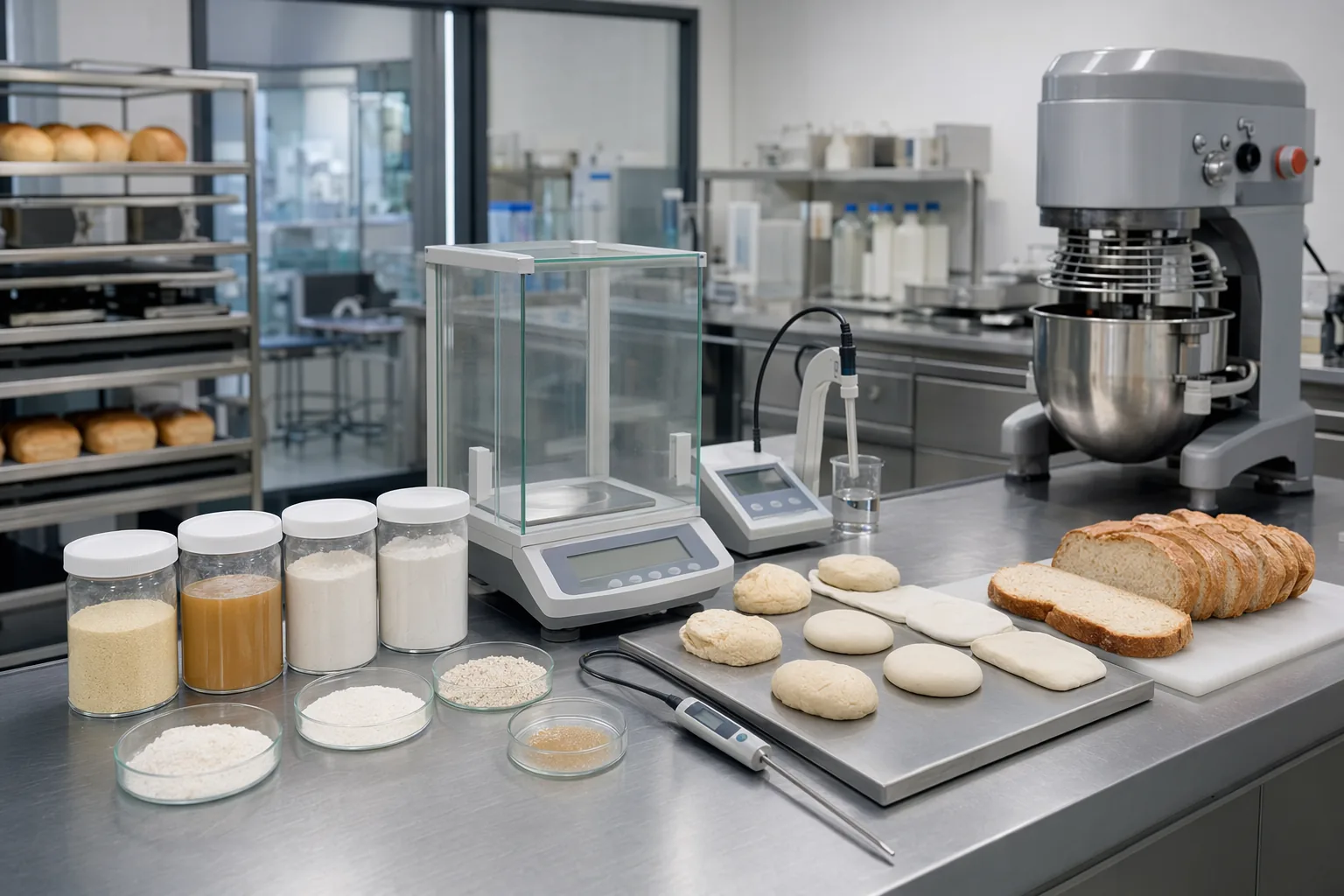
For bakery manufacturers comparing maxilase alpha amylase searches, the right decision is not a brand or syrup claim. It is a validated industrial alpha-amylase specification matched to flour, dough process, bake profile, and finished-product targets.
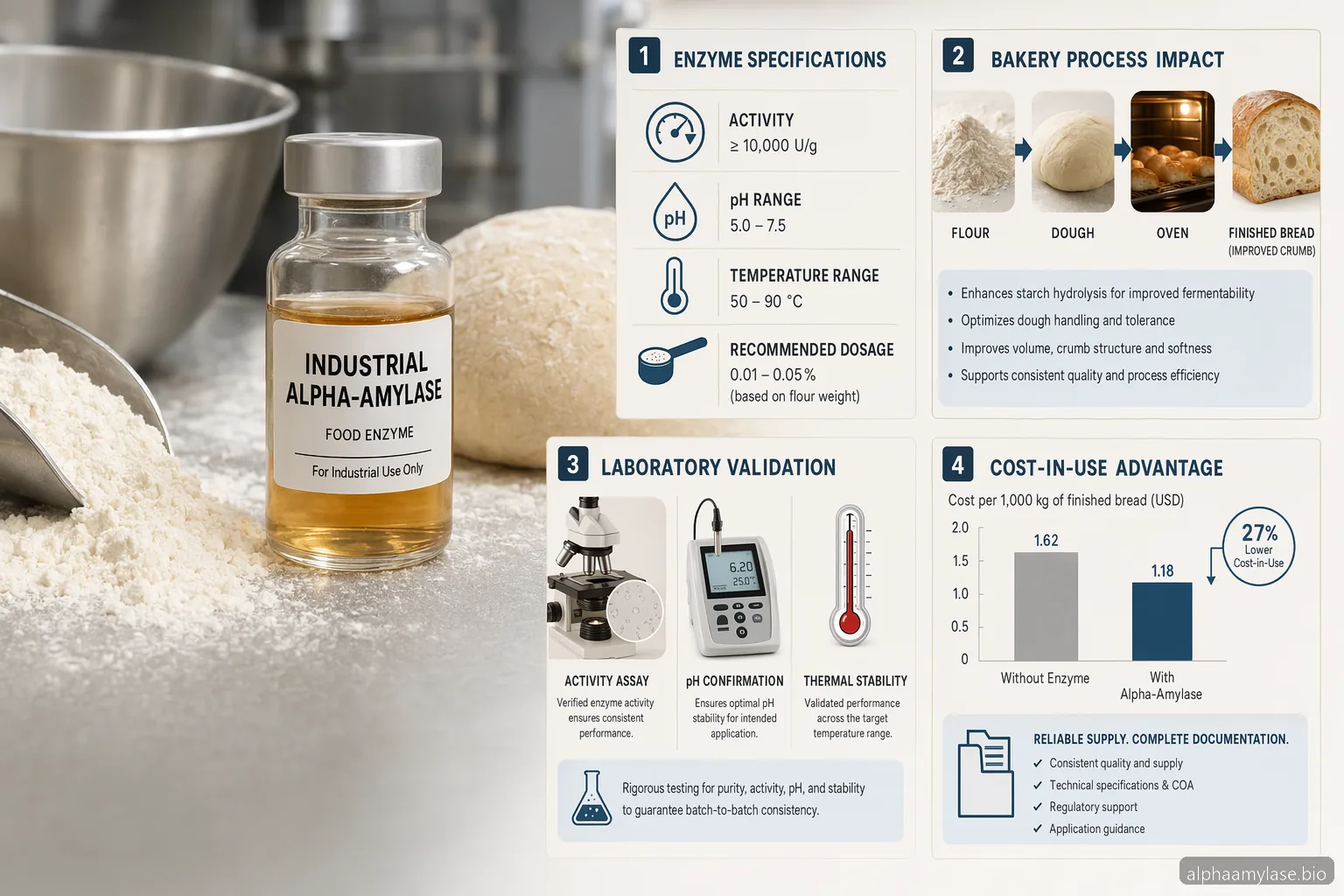
How to Interpret “Maxilase Alpha Amylase” for Industrial Baking
Search terms such as maxilase alpha amylase, alpha amylase maxilase, alpha amylase sirop, or sirop alpha amylase often mix consumer, pharmaceutical, and food-processing language. For B2B bakery procurement, the relevant comparison is an industrial alpha-amylase enzyme preparation designed for flour systems, not a medical syrup or supplement. In bread, buns, tortillas, cakes, and frozen dough, alpha-amylase hydrolyzes damaged starch into shorter dextrins and fermentable sugars. The outcome can affect yeast nutrition, crust color, dough handling, crumb softness, and staling rate. The buying question is therefore technical: does the enzyme perform under your flour quality, hydration, mixing energy, fermentation time, and baking temperature? Treat every product name or activity label as a starting point only. Confirm the alpha amylase protein source, enzyme activity method, carrier, regulatory suitability for food processing, and practical dosage through controlled trials.
Do not specify by search term alone. • Separate industrial baking enzyme needs from consumer syrup terminology. • Compare measurable performance under your actual process.
Core Specification Parameters to Request
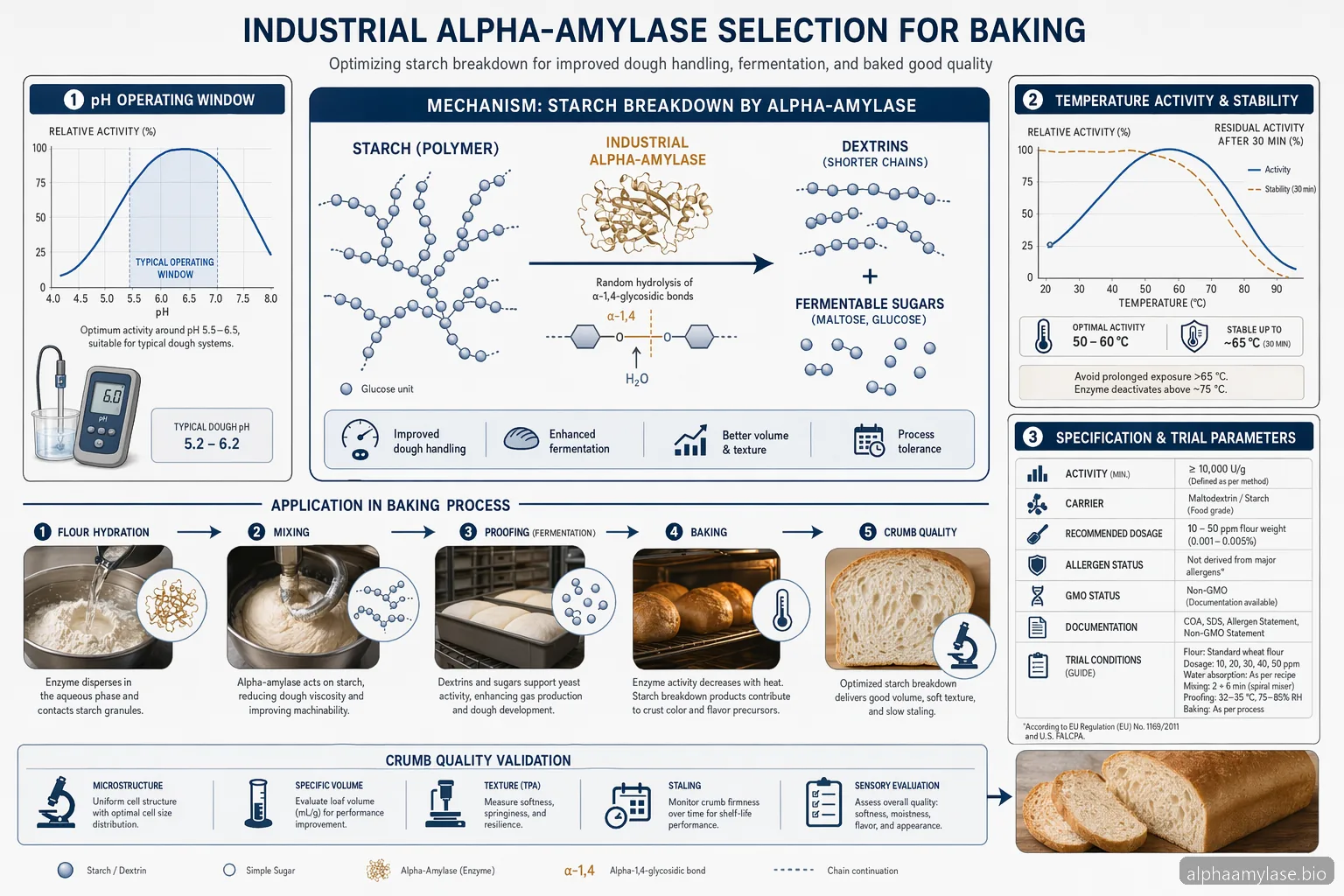
A strong alpha-amylase specification should define more than headline activity. Ask whether the product is fungal alpha-amylase, bacterial amylase, or another food-processing source, because thermal behavior differs significantly. Many fungal alpha-amylases used in baking show useful activity around pH 4.5–6.0 and moderate dough temperatures, then lose activity during baking. Bacterial amylases may show higher heat tolerance, often requiring tighter dosage control to avoid excessive dextrinization, sticky crumb, or gummy texture. Request the activity unit definition, analytical method, acceptance range, moisture or liquid concentration, carrier system, appearance, solubility or dispersibility, storage temperature, and shelf life. If a label such as alpha amylase 3000 is presented, verify what “3000” means, which unit is used, and whether results are comparable across suppliers. Non-harmonized units can make apparent low-cost options expensive in use.
Confirm enzyme source and thermal profile. • Verify activity units and test method. • Check carrier, dilution, storage, and shelf-life conditions. • Avoid comparing products only by stated activity number.
Practical Baking Trial Conditions
Pilot validation should bracket a safe and commercially realistic dosage range before plant approval. For flour-based systems, initial screening often starts in the low ppm range, such as 10–200 ppm of enzyme preparation on flour weight, or about 0.001–0.02%, depending on activity concentration and supplier guidance. Run at least three levels: under-dose, target, and over-dose. Keep flour lot, water absorption, mixing time, yeast level, proof time, and bake profile constant. Monitor dough stickiness, proof tolerance, oven spring, crust color, crumb structure, sliceability, and softness over storage. Include a no-enzyme control and, if relevant, the incumbent alpha-amylase enzyme. For frozen dough or par-baked applications, add freeze-thaw and delayed-bake checks. Record pH of dough or batter, typical 5.0–6.2 for many bread systems, because pH can shift enzyme performance.
Screen at three dosage levels plus a control. • Use the same flour lot and process settings. • Measure both day-one quality and shelf-life behavior. • Watch for over-dosing signs such as tacky crumb or gumminess.
Documents Every Supplier Should Provide
Before purchasing, request a complete technical document pack. The Certificate of Analysis should identify lot number, activity result, specification limits, manufacture or release date, and key quality checks. The Technical Data Sheet should describe application fit, dosage guidance, pH and temperature profile, storage, packaging, and handling instructions. The Safety Data Sheet should cover occupational handling, dust or aerosol precautions, personal protective equipment, spill response, and transport classification where applicable. For food manufacturing, also ask for ingredient declaration support, allergen information, country of origin where needed, non-GMO or dietary statements if relevant to your market, and any regulatory suitability statement the supplier can substantiate. Avoid accepting invented certifications or vague claims. A qualified alpha amylase supplier should also offer sample traceability, change notification, complaint handling, and access to technical staff who understand baking process variables.
COA: lot-specific activity and quality data. • TDS: use conditions and application guidance. • SDS: safe industrial handling information. • Supplier file: traceability, statements, and change control.
Cost-in-Use and Supplier Qualification
The lowest price per kilogram is rarely the lowest-cost alpha-amylase choice. Compare cost-in-use based on delivered activity, effective dose, yield impact, rework risk, waste reduction, shelf-life improvement, and line performance. A concentrated product may be economical if it disperses consistently and delivers stable results; a diluted product may be preferable when micro-dosing accuracy is difficult. Supplier qualification should include manufacturing consistency, retained samples, lead time reliability, packaging integrity, minimum order quantity, technical service, and responsiveness during scale-up. Ask how the supplier manages specification changes, raw material changes, and production site changes. For critical bakery lines, run at least one production-scale confirmation after pilot success. Document finished product results, operator feedback, and QC sign-off. The final approval should balance sensory quality, process robustness, regulatory fit, and total cost per tonne of flour processed.
Calculate cost per tonne of flour, not price per kilogram. • Include waste, rework, softness targets, and dosing practicality. • Assess lead time, packaging, support, and change notification. • Confirm pilot results at production scale before full conversion.
Technical Buying Checklist
Buyer Questions
Not necessarily. The phrase may appear in searches that mix consumer syrup, supplement, or medicine-related language with industrial enzyme terms. Bakery manufacturers should specify a food-processing alpha-amylase enzyme by source, activity method, pH range, temperature profile, carrier, documentation, and validated performance in dough. Do not substitute consumer alpha amylase sirop terminology for an industrial ingredient specification.
Dosage depends on enzyme activity, flour damage, formulation, fermentation time, and bake profile. A practical pilot screen may test about 10–200 ppm of enzyme preparation on flour weight, or roughly 0.001–0.02%, when aligned with supplier guidance. Always include a no-enzyme control and an over-dose condition to identify risks such as sticky dough, gummy crumb, or excessive crust color.
First confirm what “3000” means. Activity numbers can reflect different analytical methods, substrates, temperatures, pH conditions, or unit definitions. Request the TDS and COA for each lot, then compare products by effective dose in your formula and cost per tonne of flour. Pilot baking performance is more reliable than comparing activity labels without method alignment.
QC should cover both dough handling and finished-product quality. Track water absorption, mixing tolerance, dough stickiness, proof stability, oven spring, loaf volume, crumb grain, sliceability, crust color, and softness over storage. Where available, measure falling number, damaged starch, reducing sugars, or crumb firmness. The goal is to detect both under-performance and over-dextrinization before plant adoption.
At minimum, request a COA, TDS, and SDS. For food production, also ask for allergen information, ingredient declaration support, origin or regulatory statements relevant to your market, storage instructions, shelf-life data, and packaging details. A qualified alpha amylase supplier should provide lot traceability, technical support, sample documentation, and change-control communication without relying on vague or unverifiable claims.
Alpha-Amylase for Research & Industry
Need Alpha-Amylase for your lab or production process?
ISO 9001 certified · Food-grade & research-grade · Ships to 80+ countries
Frequently Asked Questions
Is maxilase alpha amylase the same as an industrial baking enzyme?
Not necessarily. The phrase may appear in searches that mix consumer syrup, supplement, or medicine-related language with industrial enzyme terms. Bakery manufacturers should specify a food-processing alpha-amylase enzyme by source, activity method, pH range, temperature profile, carrier, documentation, and validated performance in dough. Do not substitute consumer alpha amylase sirop terminology for an industrial ingredient specification.
What dosage of alpha amylase should a bakery test first?
Dosage depends on enzyme activity, flour damage, formulation, fermentation time, and bake profile. A practical pilot screen may test about 10–200 ppm of enzyme preparation on flour weight, or roughly 0.001–0.02%, when aligned with supplier guidance. Always include a no-enzyme control and an over-dose condition to identify risks such as sticky dough, gummy crumb, or excessive crust color.
How should we compare alpha amylase 3000 with another product?
First confirm what “3000” means. Activity numbers can reflect different analytical methods, substrates, temperatures, pH conditions, or unit definitions. Request the TDS and COA for each lot, then compare products by effective dose in your formula and cost per tonne of flour. Pilot baking performance is more reliable than comparing activity labels without method alignment.
Which QC checks matter most for alpha-amylase in baking?
QC should cover both dough handling and finished-product quality. Track water absorption, mixing tolerance, dough stickiness, proof stability, oven spring, loaf volume, crumb grain, sliceability, crust color, and softness over storage. Where available, measure falling number, damaged starch, reducing sugars, or crumb firmness. The goal is to detect both under-performance and over-dextrinization before plant adoption.
What documents should an alpha amylase supplier provide before approval?
At minimum, request a COA, TDS, and SDS. For food production, also ask for allergen information, ingredient declaration support, origin or regulatory statements relevant to your market, storage instructions, shelf-life data, and packaging details. A qualified alpha amylase supplier should provide lot traceability, technical support, sample documentation, and change-control communication without relying on vague or unverifiable claims.
Related: Alpha Amylase for Baking Bread — Dough Conditioning and Shelf Life
Turn This Guide Into a Supplier Brief Request a baking alpha-amylase specification review, sample plan, and pilot-trial dosage matrix for your flour system. See our application page for Alpha Amylase for Baking Bread — Dough Conditioning and Shelf Life at /applications/alpha-amylase-bread-dough-conditioning/ for specs, MOQ, and a free 50 g sample.
Contact Us to Contribute