Fungal Alpha Amylase: Alpha-Amylase Specification Checklist for Baking
Compare fungal alpha amylase for baking: activity, pH, temperature, dosage, COA/TDS/SDS, pilot trials, cost-in-use, and supplier checks.
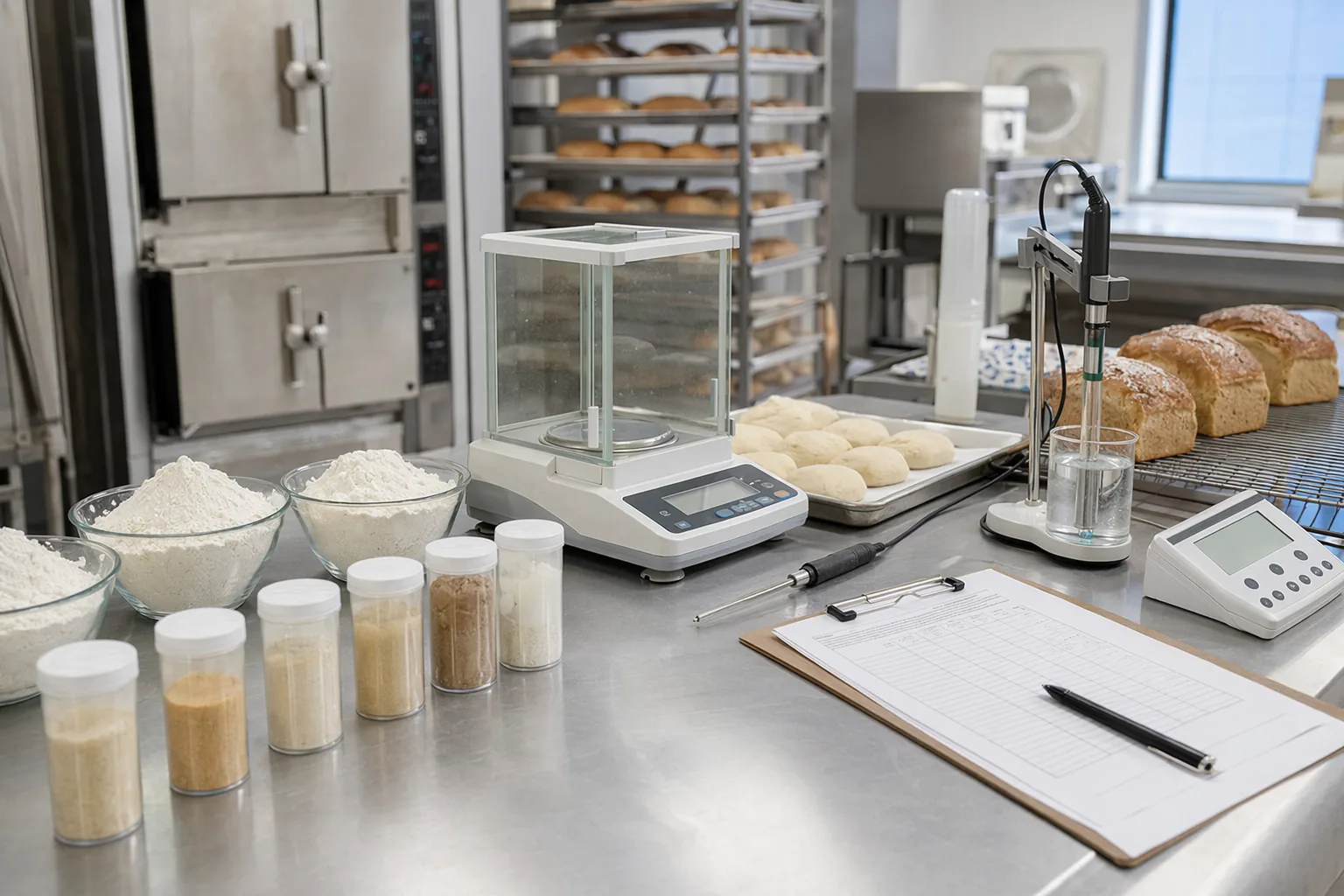
For bakery enzyme buyers, fungal alpha amylase selection is less about a headline activity number and more about controlled crumb softness, fermentation support, oven inactivation, and repeatable cost-in-use.
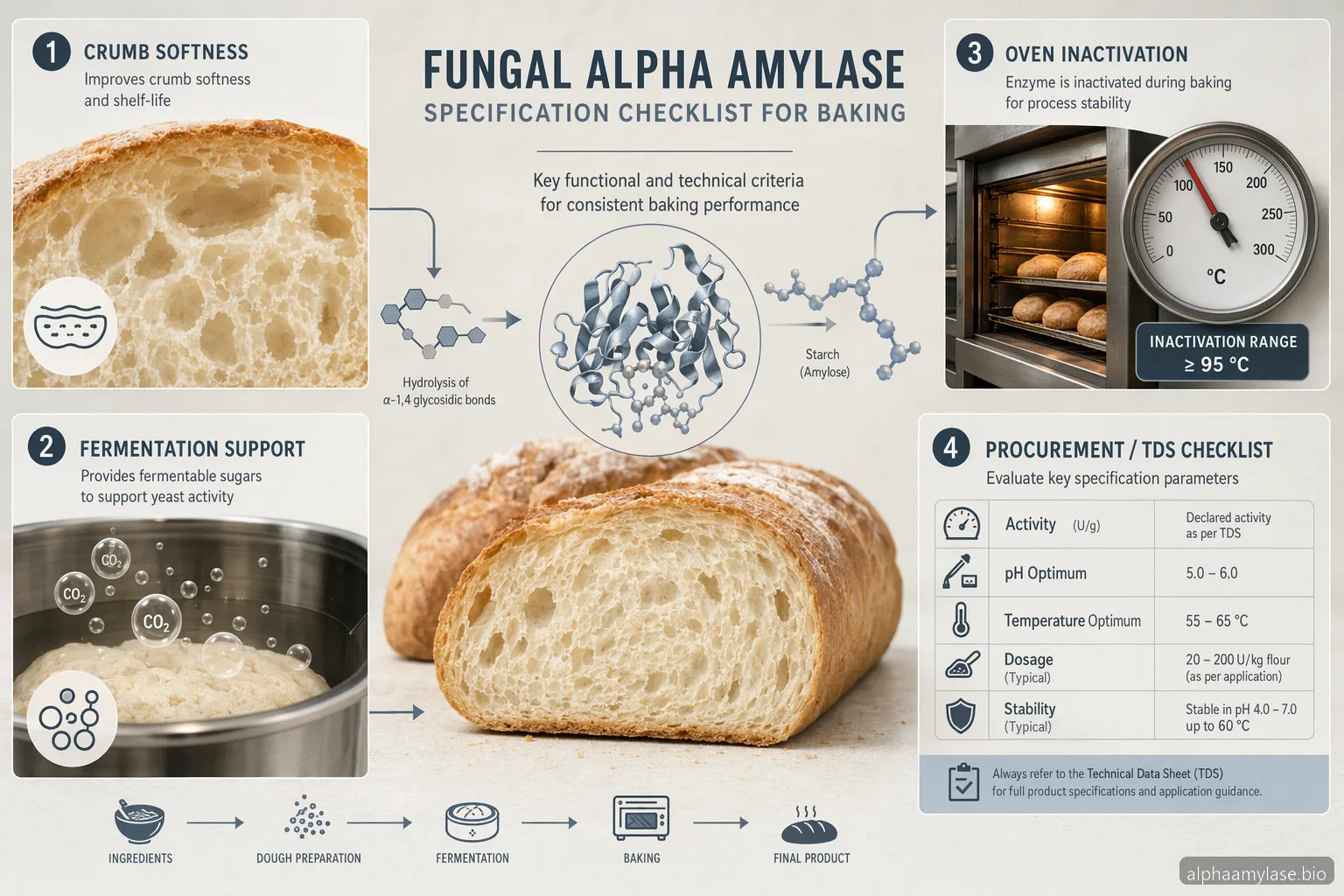
Why fungal alpha amylase is specified for baking
Fungal alpha amylase is commonly selected in baking because it converts damaged starch into fermentable sugars and dextrins under dough and early-bake conditions. Compared with many bacterial amylase options designed for starch liquefaction, a fungal alpha-amylase is typically less heat-stable, which helps limit excessive starch breakdown once the crumb sets. This matters for sandwich bread, buns, rolls, sweet goods, and frozen dough systems where buyers need improved yeast activity, crust color, oven spring, and shelf-life softness without creating sticky crumb. In procurement terms, the best alpha amylase enzyme is not the highest-activity product; it is the product that delivers the target bake performance at the lowest validated dose. Ask suppliers to define the alpha amylase protein source, activity method, declared units, and recommended flour-basis dosage. For bakery use, avoid comparing directly with enzyme grades promoted for syrup production, medical syrup searches, or unrelated consumer applications.
Primary baking role: starch hydrolysis for sugars and softness. • Preferred risk profile: effective in dough, reduced activity after baking. • Key comparison: functional bake results, not only unit price.
Process conditions to request on the TDS
A useful technical data sheet should show the operating window rather than only a generic description of alpha amylase. For many fungal alpha amylase products, bakery-relevant activity is strongest around mildly acidic to near-neutral dough pH, often near pH 4.5 to 6.0, with useful activity through the warm dough and early oven phase. Temperature optima often fall around 45 to 60°C, while progressive inactivation occurs as baking temperatures raise crumb temperature beyond typical enzyme tolerance. Exact values vary by strain, formulation, granulation, moisture, and analytical method, so the supplier’s TDS must be product-specific. For trials, start with a conservative dosage band such as 10 to 80 g per metric ton of flour for concentrated bakery powders, or follow the supplier’s unit-based guidance. Liquid products and lower-activity blends may require different inclusion rates. Record flour quality, damaged starch, absorption, dough temperature, proof time, and bake profile during evaluation.
Request pH activity curve, not only optimum pH. • Request temperature curve and inactivation behavior. • Dose on flour weight and confirm actual delivered enzyme activity. • Adjust trials for damaged starch and flour variation.
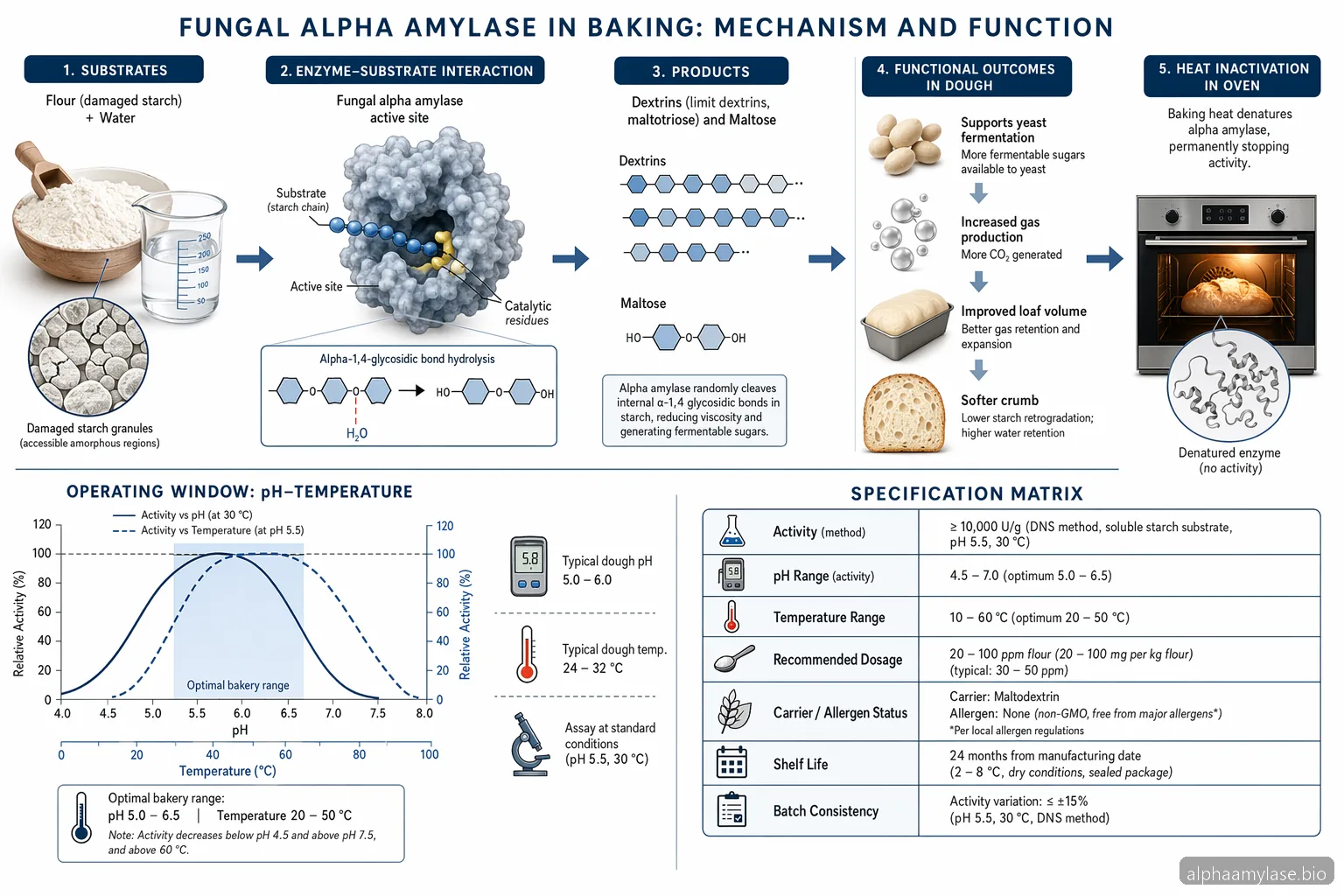
Fungal versus bacterial amylase in bakery buying
The most important comparison is thermal stability. Bacterial amylase, especially heat-stable grades used for starch liquefaction, can remain active longer during baking and may cause gummy crumb, weak sliceability, or excessive dextrin formation if misapplied. Fungal alpha amylase is usually preferred where controlled amylolysis and oven inactivation are required. That does not mean bacterial amylase is inferior; it is often the correct choice for starch processing, brewing adjunct conversion, or high-temperature liquefaction. For baking, however, specification should focus on dough performance, not industrial syrup metrics. Search phrases such as alpha amylase 3000, sirop alpha amylase, or alpha amylase sirop may refer to activity labels or syrup-sector use cases, so buyers should confirm the intended food-processing application before sampling. A qualified supplier should clearly separate bakery enzyme grades from starch conversion products and provide recommendations based on flour type, product format, and processing line conditions.
Fungal alpha amylase: controlled baking performance and lower heat stability. • Bacterial amylase: often stronger fit for liquefaction or high-temperature starch work. • Do not substitute syrup or liquefaction grades without pilot validation.
Specification checklist for procurement approval
A bakery enzyme specification should be written so quality, R&D, production, and purchasing can all evaluate the same criteria. Start with the declared activity and method, because FAU, SKB, DU, or supplier-specific units are not interchangeable without method details. Confirm physical form, carrier, bulk density, dusting behavior, solubility or dispersibility, recommended storage, shelf life, and packaging size. The COA should verify batch activity, appearance, moisture or loss on drying where relevant, microbiological limits, and any agreed contaminants testing. The SDS should support safe handling, respiratory exposure controls, spill response, and storage segregation. The TDS should cover application guidance, process conditions, dosage, and compatibility with improvers such as emulsifiers, oxidants, reducing agents, and other enzymes. For supplier qualification, request traceability, allergen statement, GMO or non-GMO position if commercially required, country of origin, change notification process, and continuity of supply plan.
COA: confirms batch-specific quality and activity. • TDS: defines application and process guidance. • SDS: supports plant safety and handling controls. • Qualification: traceability, change control, and supply reliability.
Pilot validation and cost-in-use
Pilot validation should use the buyer’s flour, formula, mixer, proofing profile, and bake conditions whenever possible. Begin at the supplier’s low recommended dose, then test mid and high points to identify the response curve and overdose boundary. Typical QC checks include farinograph or mix time observations, dough stickiness, proof height, oven spring, loaf volume, crust color, crumb grain, crumb firmness over 1 to 7 days, sliceability, and sensory notes. For frozen dough, include freeze-thaw and post-storage proof performance. Cost-in-use should be calculated from active dose, delivered price, handling loss, inclusion accuracy, rework reduction, shelf-life value, and any formulation offsets such as sugar or malt flour adjustment. A cheaper alpha amylase may cost more if it requires higher dosing or causes inconsistent crumb. Approve fungal alpha amylase only after lab, pilot, and production-scale confirmation align with the product’s COA and TDS claims.
Test low, target, and high doses to define the safe operating range. • Measure softness over shelf life, not only day-one volume. • Calculate cost per metric ton of flour or per finished unit. • Scale up before locking the commercial specification.
Red flags when comparing alpha amylase suppliers
A supplier should be able to explain what their alpha amylase enzyme does in bakery processing and what it should not be used for. Red flags include missing activity methods, vague units, no recent COA, no SDS, no bakery-specific TDS, or claims that one product works equally well for baking, brewing, textile desizing, and starch liquefaction without formulation changes. Be cautious with samples that arrive without lot identification, storage instructions, or recommended dosage. Also avoid specifications based only on generic alpha amylase protein descriptions, because source organism, formulation, side activities, and carrier system influence dough performance. If a supplier cannot discuss pH, temperature, inactivation, microbiology, and scale-up support, the purchasing risk is high. Strong suppliers provide practical trial protocols, transparent documentation, realistic lead times, and technical support for troubleshooting gummy crumb, pale crust, low volume, or variable flour performance.
Missing COA, TDS, or SDS is a qualification concern. • Unclear activity units make price comparison unreliable. • One-size-fits-all application claims require extra validation. • Technical support should include troubleshooting, not only pricing.
Technical Buying Checklist
Buyer Questions
For many bread and bun applications, fungal alpha amylase is preferred because it provides controlled starch hydrolysis during dough fermentation and early baking, then loses activity as baking progresses. Some bacterial amylase products are more heat-stable and may be better suited to starch liquefaction. The right choice depends on formula, flour damage, bake profile, target softness, and pilot validation results.
Use the supplier’s TDS as the primary guide because activity units and formulations vary. For concentrated bakery powders, initial screening may use a low-to-high band such as 10 to 80 g per metric ton of flour, but liquid or blended products can differ. Test at least three points and evaluate dough feel, volume, crust color, crumb softness, and gumminess.
A qualified supplier should provide a technical data sheet for application guidance, a safety data sheet for handling and storage controls, and a certificate of analysis for each lot. Buyers commonly also request shelf-life information, traceability, allergen and GMO position statements where relevant, packaging details, country of origin, and change-notification procedures before commercial approval.
Compare cost-in-use using the validated dose, not the quoted price per kilogram alone. Convert each product to cost per metric ton of flour or per finished unit, then include activity delivery, handling loss, dosing accuracy, shelf-life benefit, waste reduction, and any formula adjustments. A higher-priced enzyme can be more economical if it performs at a lower, more reliable dose.
Not without validation. Enzyme grades associated with syrup or starch liquefaction may have different activity levels, pH windows, temperature stability, side activities, and food-processing recommendations. A syrup-oriented alpha amylase can be too heat-stable or too aggressive for bread crumb quality. Request bakery-specific TDS guidance and run pilot bakes before considering any substitution.
Alpha-Amylase for Research & Industry
Need Alpha-Amylase for your lab or production process?
ISO 9001 certified · Food-grade & research-grade · Ships to 80+ countries
Frequently Asked Questions
Is fungal alpha amylase better than bacterial amylase for bread?
For many bread and bun applications, fungal alpha amylase is preferred because it provides controlled starch hydrolysis during dough fermentation and early baking, then loses activity as baking progresses. Some bacterial amylase products are more heat-stable and may be better suited to starch liquefaction. The right choice depends on formula, flour damage, bake profile, target softness, and pilot validation results.
What dosage of fungal alpha amylase should a bakery test first?
Use the supplier’s TDS as the primary guide because activity units and formulations vary. For concentrated bakery powders, initial screening may use a low-to-high band such as 10 to 80 g per metric ton of flour, but liquid or blended products can differ. Test at least three points and evaluate dough feel, volume, crust color, crumb softness, and gumminess.
Which documents should an alpha amylase supplier provide?
A qualified supplier should provide a technical data sheet for application guidance, a safety data sheet for handling and storage controls, and a certificate of analysis for each lot. Buyers commonly also request shelf-life information, traceability, allergen and GMO position statements where relevant, packaging details, country of origin, and change-notification procedures before commercial approval.
How should cost-in-use be compared between alpha amylase products?
Compare cost-in-use using the validated dose, not the quoted price per kilogram alone. Convert each product to cost per metric ton of flour or per finished unit, then include activity delivery, handling loss, dosing accuracy, shelf-life benefit, waste reduction, and any formula adjustments. A higher-priced enzyme can be more economical if it performs at a lower, more reliable dose.
Can a syrup-grade alpha amylase be used in baking?
Not without validation. Enzyme grades associated with syrup or starch liquefaction may have different activity levels, pH windows, temperature stability, side activities, and food-processing recommendations. A syrup-oriented alpha amylase can be too heat-stable or too aggressive for bread crumb quality. Request bakery-specific TDS guidance and run pilot bakes before considering any substitution.
Related: Alpha Amylase for Baking Bread — Dough Conditioning and Shelf Life
Turn This Guide Into a Supplier Brief Request a bakery alpha amylase specification review, sample plan, and cost-in-use comparison for your flour system. See our application page for Alpha Amylase for Baking Bread — Dough Conditioning and Shelf Life at /applications/alpha-amylase-bread-dough-conditioning/ for specs, MOQ, and a free 50 g sample.
Contact Us to Contribute