Alpha Amylase Sirop for Baking: Dosage, pH, Temperature, and Troubleshooting
Troubleshoot alpha-amylase in baking: dosage, pH, temperature, QC checks, COA/TDS/SDS review, pilot trials, cost-in-use, and supplier qualification.
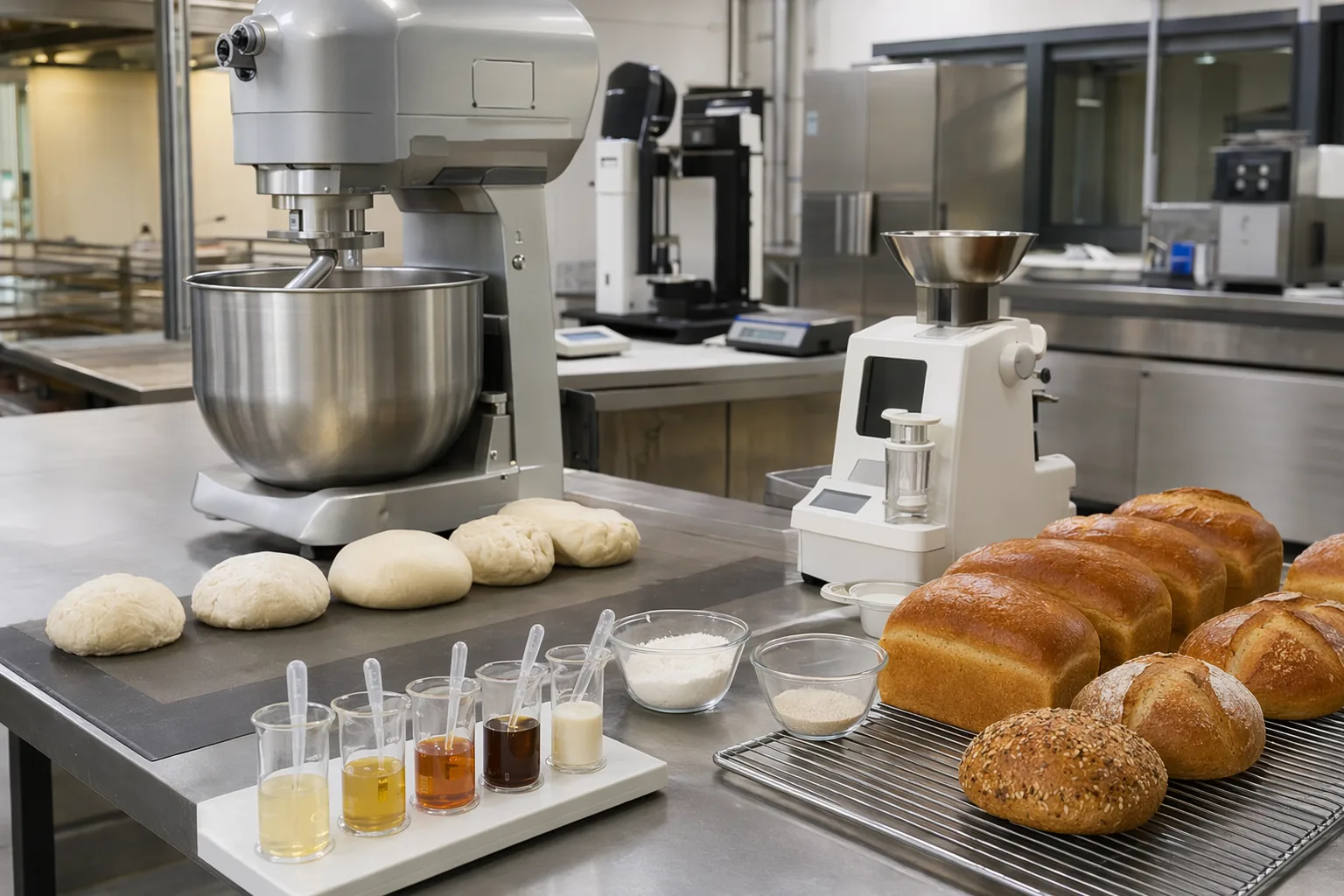
For industrial bakeries and ingredient buyers, “alpha amylase sirop” typically means a liquid alpha-amylase enzyme preparation for flour correction, dough handling, loaf volume, and crumb quality—not a medical syrup.
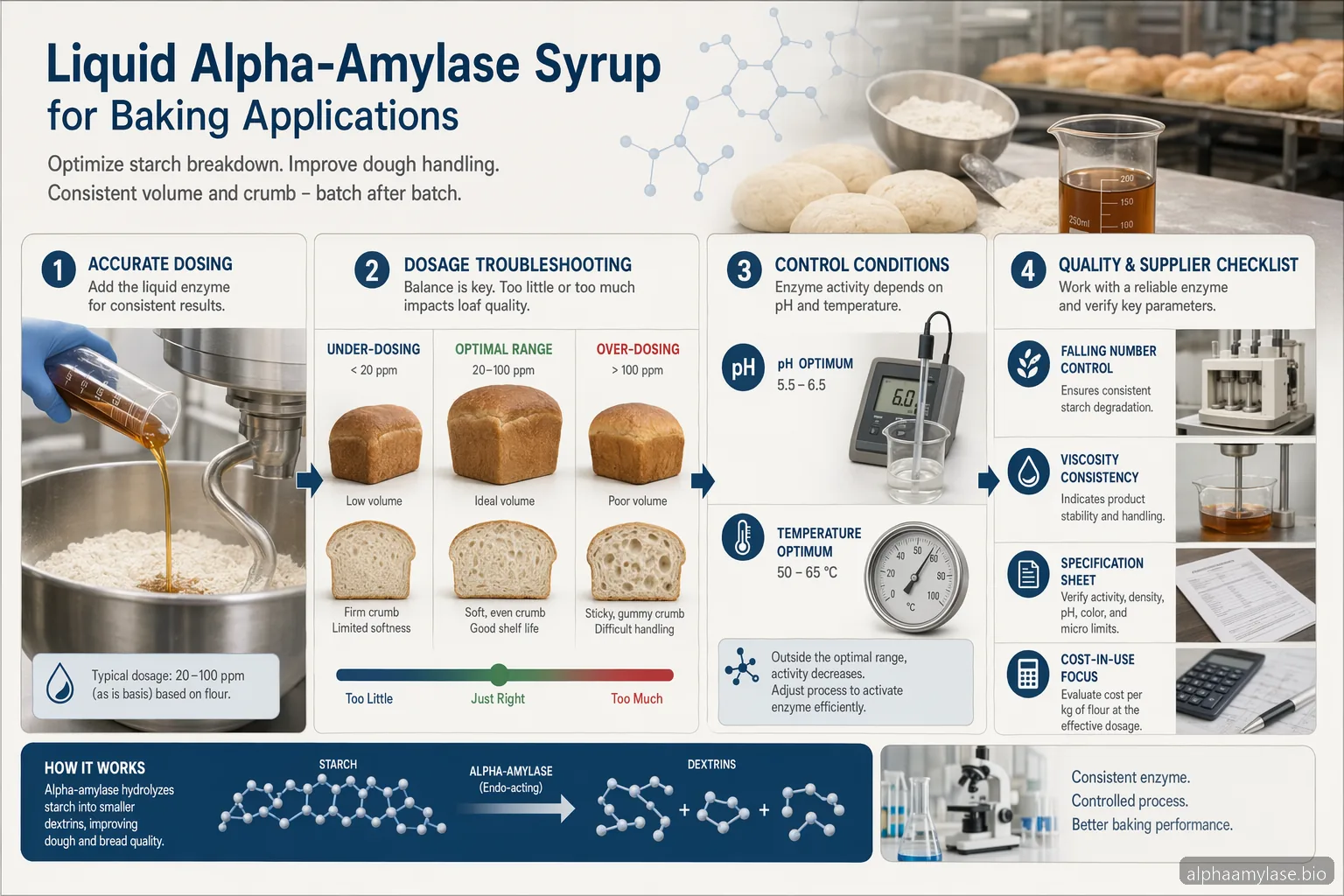
What “Alpha Amylase Sirop” Means in Industrial Baking
In B2B bakery procurement, the phrase “alpha amylase sirop” or “sirop alpha amylase” is often used to describe a liquid alpha amylase enzyme preparation supplied for dosing into flour, sponge, brew, or dough systems. It should not be confused with consumer health products or diagnostic alpha amylase werte. For baking, the relevant question is process performance: how the enzyme hydrolyzes damaged starch into fermentable sugars and dextrins during mixing, fermentation, proofing, and early baking. The result can affect yeast activity, crust color, loaf volume, softness, and shelf-life perception. The same label name does not guarantee equivalent performance. Activity units, production organism, carrier system, concentration, and side activities all matter. Buyers should request a current TDS, COA, and SDS, then confirm performance through pilot bakes on the target flour and recipe.
Clarify whether the product is liquid, powder, or granulated. • Confirm declared enzyme activity and test method. • Check compatibility with flour improvers, emulsifiers, yeast, and oxidants. • Avoid using medical or supplement dosage information for bakery processes.
Dosage Troubleshooting: Under-Dosing vs Over-Dosing
A practical starting point for many bakery alpha-amylase products is a controlled trial range of about 5–50 g per metric ton of flour for high-strength powders, or 20–200 g per metric ton for many liquid preparations. These are only screening bands; the supplier’s activity units and your flour quality must drive the final dose. Under-dosing may show as low fermentation lift, pale crust, tight crumb, reduced oven spring, or faster firming. Over-dosing can produce sticky dough, weak sidewalls, gummy crumb, dark crust, slicing issues, and packaging condensation. If a product is marketed with terms such as alpha amylase 3000, confirm what “3000” means: SKB, DU, FAU, KNU, or another assay cannot be assumed equivalent. Always trial at least three dose points plus an untreated control, and record dough temperature, proof time, bake loss, loaf volume, crumb score, and slicing performance.
Increase dose gradually when Falling Number is high and loaf volume is low. • Reduce dose if crumb becomes wet, tacky, or collapses after cooling. • Revalidate dose when flour crop, mill stream, or damaged starch changes. • Calculate cost-in-use per tonne flour and per finished loaf.
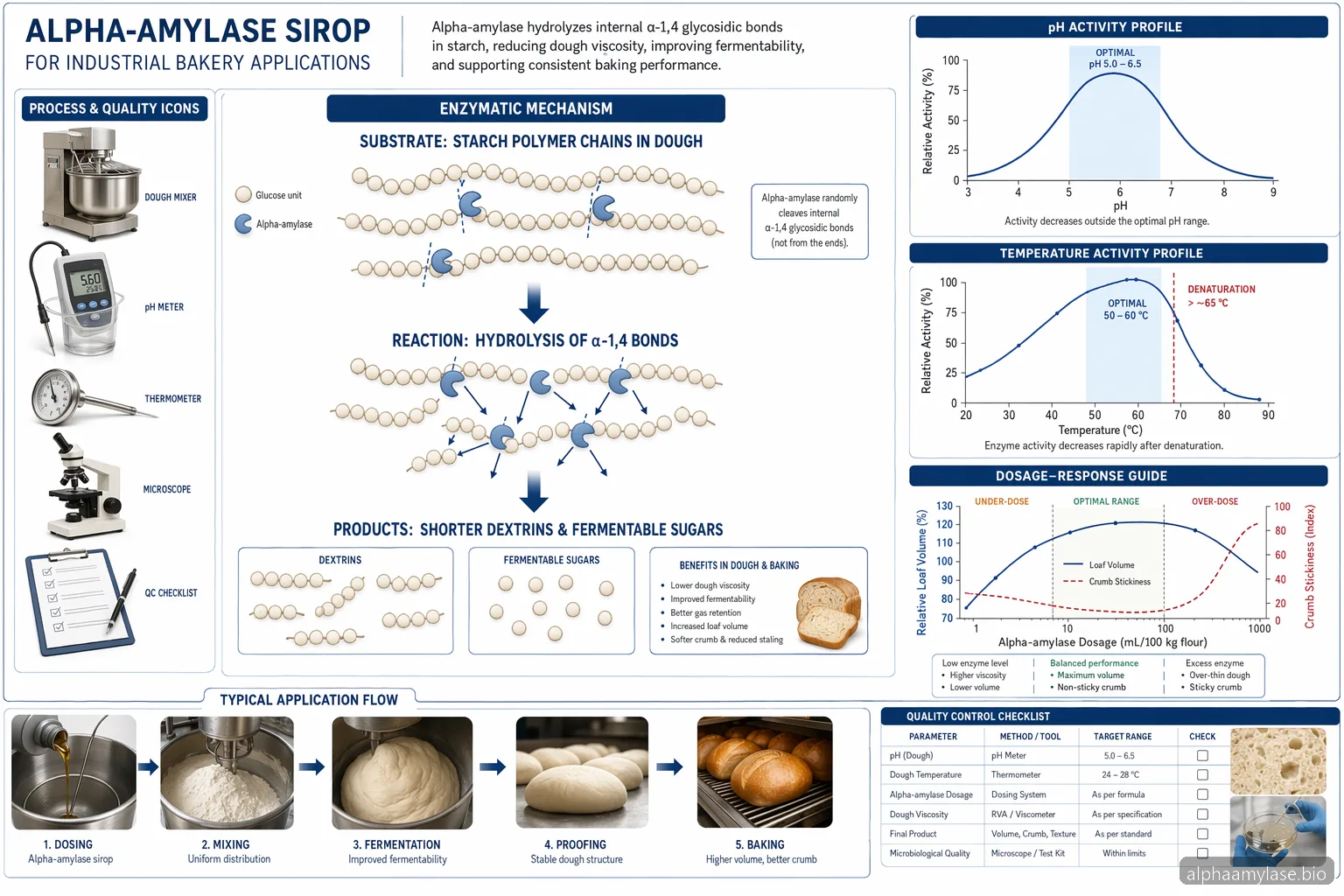
pH and Temperature Conditions That Control Enzyme Action
Most bakery doughs operate around pH 5.0–6.0, which is suitable for many fungal alpha-amylase preparations. Some bacterial amylase products are designed for higher temperature stability and may remain active longer during the bake, so they require careful selection and validation to avoid gummy crumb. Mixing temperatures are commonly held near 24–28°C for pan bread, while proofing may run around 30–38°C depending on yeast system and product style. Enzyme activity increases as dough warms, then decreases as proteins denature in the oven. Many fungal alpha-amylases lose activity as crumb temperature moves through roughly 70–85°C; more thermostable bacterial versions may persist longer. The right choice depends on the desired sugar release window. When troubleshooting, measure actual dough pH and internal temperature rather than relying on setpoints, because fermentation rate, acidulants, sourdough, and retarded dough schedules can shift performance.
Record dough pH at make-up and after proof. • Track dough temperature after mixing, before proof, and before baking. • Use internal crumb temperature data to understand inactivation timing. • Avoid switching to bacterial amylase without a gummy-crumb risk trial.
QC Checks for Reliable Bakery Performance
Alpha amylase performance is best managed through flour and bake QC, not by enzyme dose alone. For incoming flour, Falling Number is widely used to indicate native amylase activity; many bread flours are managed in a broad range such as 250–350 seconds, though target values depend on product, region, and customer specification. Amylograph or RVA data can show starch viscosity behavior during heating. Damaged starch, moisture, protein, and ash also influence how much substrate is available. During pilot validation, compare treated and untreated batches for mix tolerance, proof height, oven spring, crust color, crumb resilience, moisture migration, and sliceability after cooling and after 24–72 hours. If the alpha amylase protein concentration is disclosed, treat it as supporting information only; activity per gram and application performance are more important. Keep retains of flour, enzyme lot, and finished bread for root-cause investigation.
Use Falling Number and RVA/amylograph trends together where possible. • Document enzyme lot number, activity, dose, and addition point. • Score crumb gumminess after full cooling, not directly from the oven. • Repeat trials with production-scale mixing and baking where feasible.
Supplier Qualification and Cost-in-Use
An alpha amylase supplier should support more than a price quote. For each candidate alpha-amylase, request the TDS for activity, recommended pH and temperature range, dosage guidance, storage conditions, shelf life, and handling notes. The COA should confirm lot-specific activity and key quality checks, while the SDS should address safe industrial handling, dust or aerosol risk, personal protective equipment, and spill management. Also request allergen, food-grade suitability, country-of-origin, and carrier information relevant to your market. Cost-in-use should include dose per tonne flour, activity retention during storage, dosing accuracy, waste, trial support, and impact on scrap or customer complaints. A lower-cost product can be more expensive if it requires higher dosage or causes process variability. Before approval, complete pilot validation, one plant-scale run, and a supplier change-control review.
Compare products on cost per functional bake result, not cost per kilogram. • Confirm minimum order quantity, lead time, and packaging fit for your plant. • Require lot traceability and notification of material or process changes. • Store liquids and powders according to the supplier’s TDS conditions.
Technical Buying Checklist
Buyer Questions
No. In an industrial baking context, alpha amylase sirop usually refers to a liquid alpha amylase enzyme preparation used as a processing aid or ingredient system component. It is evaluated by activity units, dose on flour, pH and temperature behavior, and bake performance. Medical uses, diagnostic alpha amylase werte, and consumer syrup dosing are outside the scope of bakery process design.
Begin with the supplier’s recommended range, then run a small matrix around it. A common screening approach is three dose levels plus an untreated control, using the same flour, water absorption, yeast level, proof time, and bake profile. Measure loaf volume, crust color, crumb texture, stickiness, and slicing after full cooling. Final dosage should be based on activity units and repeatable plant results.
Bacterial amylase can be useful where greater heat tolerance or a longer starch-hydrolysis window is desired, but it can also increase the risk of excessive dextrin formation and gummy crumb if not controlled. It should be trialed against a fungal alpha amylase enzyme under the real bake profile. Confirm pH range, inactivation behavior, and dose sensitivity before approving it for production.
At minimum, request a technical data sheet, certificate of analysis, and safety data sheet for the exact product and lot. The TDS should state activity, dosage guidance, pH and temperature range, storage, shelf life, and application notes. The COA should verify lot-specific activity. The SDS should support safe handling, including enzyme dust or aerosol exposure controls for industrial personnel.
Common causes include a new flour crop, lower Falling Number, higher damaged starch, longer proof, warmer dough, delayed baking, or a change in oven profile. A more active enzyme lot or dosing pump drift can also contribute. Check flour QC, enzyme COA, actual pump output, dough pH, internal crumb temperature, and cooling time. Reduce dose only after confirming the process change.
Alpha-Amylase for Research & Industry
Need Alpha-Amylase for your lab or production process?
ISO 9001 certified · Food-grade & research-grade · Ships to 80+ countries
Frequently Asked Questions
Is alpha amylase sirop the same as a medical syrup?
No. In an industrial baking context, alpha amylase sirop usually refers to a liquid alpha amylase enzyme preparation used as a processing aid or ingredient system component. It is evaluated by activity units, dose on flour, pH and temperature behavior, and bake performance. Medical uses, diagnostic alpha amylase werte, and consumer syrup dosing are outside the scope of bakery process design.
How should a bakery set the first alpha-amylase dosage?
Begin with the supplier’s recommended range, then run a small matrix around it. A common screening approach is three dose levels plus an untreated control, using the same flour, water absorption, yeast level, proof time, and bake profile. Measure loaf volume, crust color, crumb texture, stickiness, and slicing after full cooling. Final dosage should be based on activity units and repeatable plant results.
When is bacterial amylase appropriate in baking?
Bacterial amylase can be useful where greater heat tolerance or a longer starch-hydrolysis window is desired, but it can also increase the risk of excessive dextrin formation and gummy crumb if not controlled. It should be trialed against a fungal alpha amylase enzyme under the real bake profile. Confirm pH range, inactivation behavior, and dose sensitivity before approving it for production.
What documents should an alpha amylase supplier provide?
At minimum, request a technical data sheet, certificate of analysis, and safety data sheet for the exact product and lot. The TDS should state activity, dosage guidance, pH and temperature range, storage, shelf life, and application notes. The COA should verify lot-specific activity. The SDS should support safe handling, including enzyme dust or aerosol exposure controls for industrial personnel.
Why did the same alpha amylase dose suddenly cause sticky crumb?
Common causes include a new flour crop, lower Falling Number, higher damaged starch, longer proof, warmer dough, delayed baking, or a change in oven profile. A more active enzyme lot or dosing pump drift can also contribute. Check flour QC, enzyme COA, actual pump output, dough pH, internal crumb temperature, and cooling time. Reduce dose only after confirming the process change.
Related: Alpha Amylase for Baking Bread — Dough Conditioning and Shelf Life
Turn This Guide Into a Supplier Brief Request an alpha-amylase baking trial pack with COA, TDS, SDS, dosage guidance, and supplier qualification support. See our application page for Alpha Amylase for Baking Bread — Dough Conditioning and Shelf Life at /applications/alpha-amylase-bread-dough-conditioning/ for specs, MOQ, and a free 50 g sample.
Contact Us to Contribute