Alpha Amylase for Textile Desizing — Starch Removal Before Dyeing
Bacillus-derived alpha amylase selectively hydrolyses starch warp size from woven cotton and polyester-cotton fabrics, preparing clean, absorbent surfaces for dyeing without fibre damage.
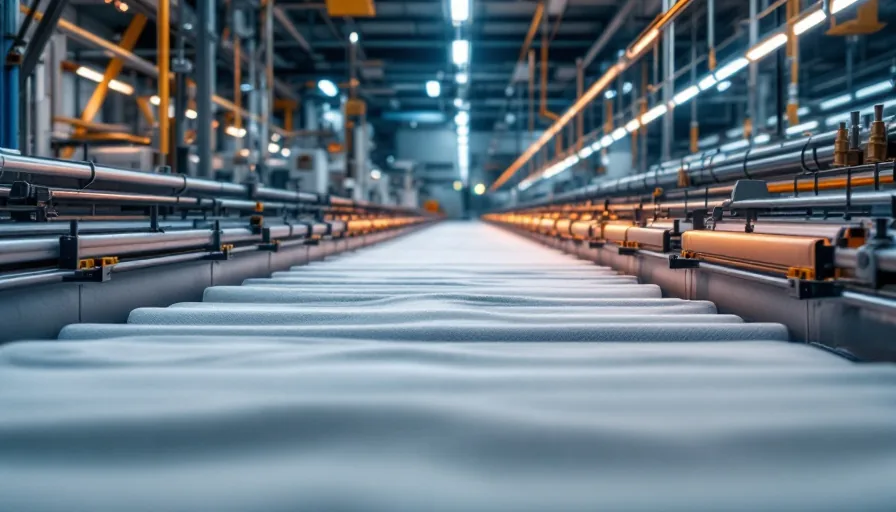
Warp yarns in weaving are protected by a starch size coat — typically 5–12% of fabric weight — applied during warping to reduce yarn breakage on the loom. Before dyeing can proceed, this starch must be completely removed. Incomplete desizing leaves a residual starch film that blocks dye penetration, causing patchy, uneven colour. Alpha amylase textile desizing is the universal industrial method because it hydrolyses starch with exceptional selectivity: the enzyme cleaves α-1,4 glycosidic bonds in the starch size and releases soluble dextrins and maltose, leaving cellulose and synthetic fibres entirely unaffected. A German-language guide covers amylase for textile desizing from the fungal alpha-amylase side.
Our thermostable alpha amylase from Bacillus amyloliquefaciens covers the two principal textile desizing process windows. In pad-steam systems — the dominant method for high-volume cotton processing — fabric is padded through enzyme liquor at 0.5–2.0 g/L, squeezed to 80–100% wet pickup, then steamed at 95–102°C for 15–30 minutes. The enzyme rapidly hydrolyses the gelatinised starch during the steam phase. In exhaust-batch systems (jiggers, winches), enzyme is applied at 1.0–3.0 g/L and the dwell is 45–90 minutes at 65–80°C.
For pH control, the enzyme bath is adjusted to pH 6.0–7.0, which matches the activity optimum of bacterial alpha amylase and avoids the acid conditions that can degrade cotton cellulose. Calcium chloride addition at 0.5–1.0 g/L maintains enzyme stability in soft-water textile plants. After the enzymatic desizing step, a hot wash at 80–90°C removes hydrolysed starch residues efficiently. The iodine spot test — which turns blue-black with residual starch and colourless with complete removal — is the standard QC check before proceeding to bleaching or dyeing.
Textile wet-processing procurement teams evaluate alpha amylase for desizing on activity at process temperature, bath stability over the pad-steam residence time, compatibility with surfactants and wetting agents in the bath, and regulatory documentation. We supply TDS, COA, and REACH-relevant material safety data per lot. MOQ 25 kg; bulk drum quantities for continuous desizing range operations.
Continuous Pad-Steam Desizing for Woven Cotton
High-volume cotton production lines run fabric through the enzyme pad bath at 0.5–1.5 g/L alpha amylase, pH 6.5–7.0, with calcium at 0.5 g/L. Wet pickup is set at 80–100% by squeeze roll pressure. The steamer delivers 95–102°C saturated steam for 20–30 minutes, hydrolysing the starch size completely. Bacillus alpha amylase at 50,000–200,000 U/g remains active throughout the steam dwell, ensuring uniform desizing across the full fabric width even at production speeds above 40 metres per minute.
Exhaust Batch Desizing in Jigger or Winch
Specialty fabrics, narrow widths, and small lots are desized in exhaust batch systems at 65–80°C for 60–90 minutes. Enzyme concentration in the bath is 1.0–3.0 g/L at pH 6.0–7.0. The Bacillus-grade alpha amylase provides good activity across this temperature range without the risk of over-treating delicate weave structures. A subsequent hot wash at 80°C and an iodine spot test confirm complete size removal before the fabric proceeds to bleaching or reactive dyeing.
Denim and Heavy Fabric Desizing
Denim warp yarns carry higher starch loads (8–12% on weight of fabric) to handle the high tension of denim weaving. Desizing heavy fabric requires higher enzyme concentration (1.5–2.5 g/L) or extended dwell time compared to lightweight cotton. Our high-activity alpha amylase grade at 100,000–200,000 U/g is preferred for heavy fabric desizing to ensure complete size hydrolysis within the pad-steam or rope-washer residence time available in denim finishing lines.
Polyester-Cotton and Synthetic Blend Desizing
Blended fabrics cannot withstand alkaline or oxidative desizing methods that can damage polyester fibres or cause oligomer precipitation. Alpha amylase desizing is the safe alternative — it removes the starch size without any effect on polyester, nylon, or other synthetic components in the blend. Process conditions at pH 6.0–7.0 and 65–85°C are compatible with most polyester-cotton blends. Surfactants in the bath assist wetting but should be tested for compatibility with the enzyme before production runs.
| Parameter | Value |
| Activity range | 50,000 – 200,000 U/g (multiple grades) |
| Optimal pH | 5.5 – 7.0 |
| Optimal temperature | 60°C – 95°C |
| Form | Light brown powder or amber liquid |
| Shelf life | 12 months (sealed, cool, dry place) |
| Packaging | 25 kg drums / 30 kg jerricans |
Frequently Asked Questions
How does alpha amylase remove starch from woven fabric?
Alpha amylase cleaves the α-1,4 bonds in starch polymer chains, rapidly reducing the continuous starch film to small, water-soluble dextrins and maltose fragments. These fragments disperse into the wash liquor and are removed in the subsequent hot wash. The key advantage over alkaline or oxidative desizing is selectivity: amylase acts only on starch, not on cellulose or synthetic fibres. This preserves fabric tensile strength, reduces chemical effluent load, and produces cleaner wastewater compared to oxidative methods.
What concentration of alpha amylase should I use in the desizing bath?
For pad-steam desizing of standard woven cotton, use 0.5–1.5 g/L at pH 6.5–7.0 with 80–100% wet pickup and 20–30 minutes steam at 95–102°C. For exhaust batch systems (jiggers, winches), use 1.0–3.0 g/L at 65–80°C for 60–90 minutes. Heavy fabrics (denim) require the higher end of the concentration range or extended dwell time. Always verify complete desizing with the iodine spot test before proceeding to bleaching or dyeing. Adjust concentration based on starch loading (% on weight of fabric) and machine residence time.
How do I check if desizing is complete before dyeing?
The iodine spot test is the standard quality check. Apply a small drop of 0.1 N iodine solution to the washed, dry fabric. Residual starch gives a blue-black colour; partially hydrolysed starch gives a blue-grey or dark purple; complete desizing gives a pale yellow to straw colour. Most specifications require a light yellow result before the fabric proceeds to bleaching or dyeing. Spot-test across the full width of the fabric and at the beginning, middle, and end of each lot to catch any uneven desizing across the batch.
Why should calcium be added to the alpha amylase desizing bath?
Calcium ions stabilise bacterial alpha amylase structure at higher temperatures (above 70°C) by binding to the enzyme's metal coordination sites, reducing thermal denaturation during the steam dwell. In soft-water textile plants where water calcium hardness is below 50 ppm, adding 0.5–1.0 g/L calcium chloride to the pad bath improves enzyme stability and ensures consistent desizing performance across the steamer. In hard-water regions, local water calcium content may be sufficient. Check water hardness before deciding whether calcium addition is needed.
Request Alpha Amylase for Your Desizing Line
For manufacturers, distributors and resellers. Tell us (1) the product: grade or application, process temperature and pH if you know them; (2) the quantity: per order or per month, powder or liquid; (3) the destination country and preferred delivery terms. We reply with a recommended grade, pack size and a quotation. Price, lead time and freight are quoted per order. We will advise on powder vs liquid and standard vs thermostable grade, ship a free 100 g sample with COA, and quote bulk pricing within 24 hours.
Request a Quote